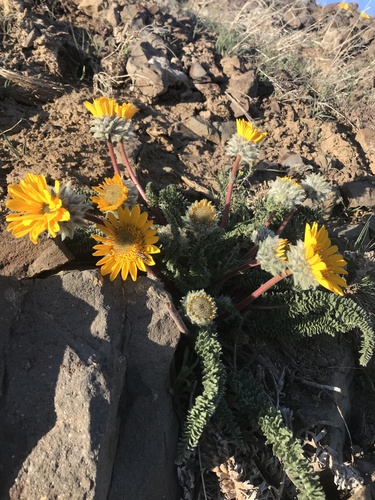
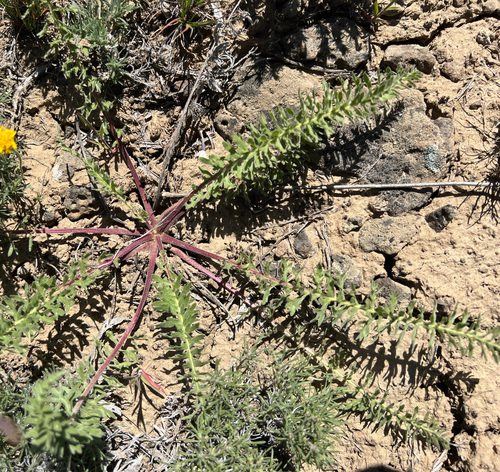
California Balsamroot
Balsamorhiza macrolepis
Care
full sun
0–2ft tall
Resistant
Friendly
Prized
Seeds eaten raw; roots eaten cooked; traditional Indigenous food
Central Valley foothills and lower Sierra Nevada from Kern County to El Dorado County, 1000-3000 ft elevation, in grasslands and oak woodlands
Care Guide
Planting
Plant California balsamroot in full sun - it's a non-negotiable requirement for this Sierra Nevada and Coast Range native. This taprooted perennial needs excellent drainage and will struggle in clay or poorly draining soil, so amend heavy soil generously before planting. Plant in fall or early spring to give the taproot time to establish before summer heat.
After Planting
Water regularly during your plant's first growing season to help the taproot establish, then taper off as it matures - this is a drought-tolerant native that evolved in dry, open habitat and will rot if kept consistently wet. Expect the plant to go dormant and die back in summer as part of its natural cycle; this is normal, not a sign of failure. The biggest mistake Bay Area gardeners make is overwatering, especially once the plant is established. Deer won't bother it, which is a bonus.
Visit Calscape for more information about California Balsamroot
Endangered & Threatened Species Supported
Endemic to California, habitat loss from urban development
Brush rabbit is a Species of Special Concern
Wildlife Supported
Insects
Nectar and pollen collection during flowering season

Larval and adult feeding on emerging foliage during growing season

Pollen foraging during bloom period
Mammals

Seed collection and caching in fall months

Opportunistic browsing on available foliage, particularly spring growth

Spring and early summer foraging on new growth and leaves