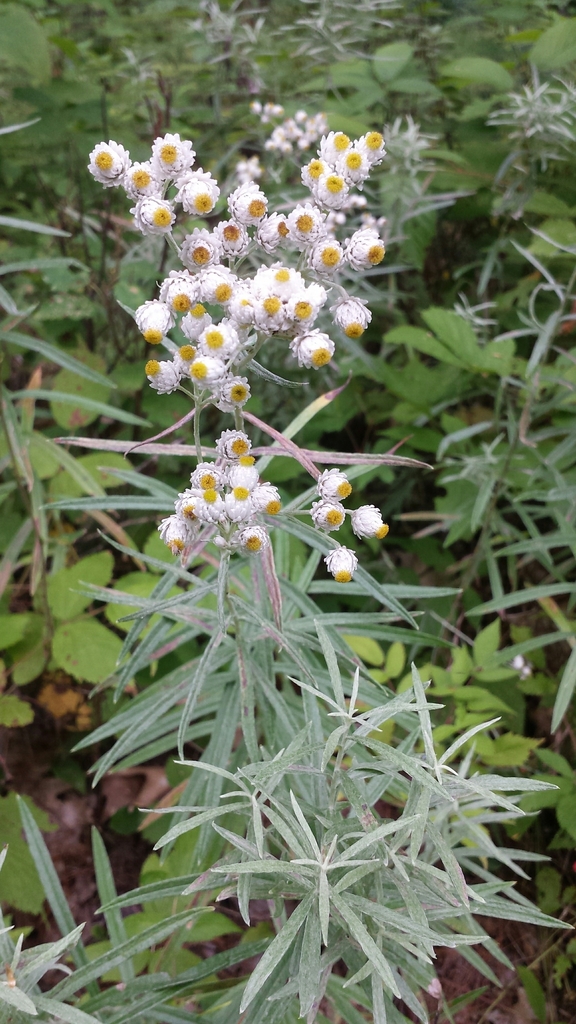
Common Pearlyeverlasting
Anaphalis margaritacea
Care
part shade, full sun
low
Fast, Medium, Slow; Tolerates sandy or clay soils.
3–4ft tall , 4–4ft wide
Jun-Aug
Deciduous
Resistant
Friendly
Prized
North Coast and Sierra Nevada from Humboldt County to Madera County, 2000-5000 ft elevation, in mixed conifer forests, extending to Oregon and British Columbia
Care Guide
Planting
Plant Common Pearlyeverlasting in full sun or partial shade in spring or summer. It tolerates sandy, clay, and fast to slow-draining soils, so don't stress about perfect soil conditions - just ensure drainage exists. Space plants about 3 feet apart to accommodate their mature height of 3–4 feet.
After Planting
Water weekly during your first summer, then taper to twice monthly or less once established. This is a short-lived perennial that's deciduous, so expect it to die back in winter and regrow in spring; this is normal. The #1 mistake is overwatering - this plant loves lean, disturbed conditions and thrives on neglect rather than fussing. Deer will leave it alone, making it a low-maintenance choice for your garden.
Visit Calscape for more information about Common Pearlyeverlasting
Endangered & Threatened Species Supported
California Species of Special Concern; monarch populations declining
Wildlife Supported
Insects
Primary nectar source during active colony period Jun-Aug
Critical fall migration fuel source during southbound movement Sep-Oct
Multiple species utilize abundant summer nectar
Summer foraging peak Jul-Aug during worker production
Nectar source during Jul-Aug flight period
Specialist foragers during peak bloom Jul-Aug
Uses as shelter and food source particularly in winter aggregations
Pollinator visiting flowers during warm months
+7 more species