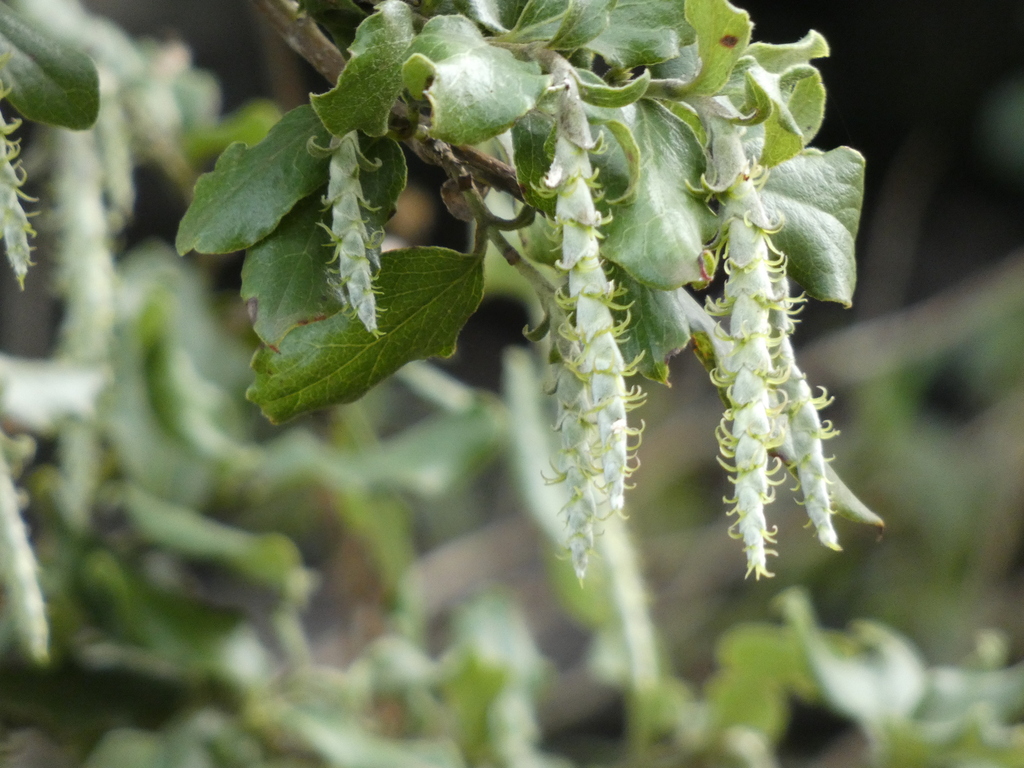
Spice Bush (Silk Tassel)
Garrya elliptica
Care
full sun, part shade
very low
well-drained; no summer water once established
8–15ft tall , 8–12ft wide
Dec-Mar · greenish
Evergreen
Resistant
Prized
Coastal California and Oregon
Long dangling catkin-like tassels, especially showy on male plants
Male plants have spectacular long tassels; good screen or specimen
Care Guide
Planting
Plant your silk tassel in full sun, though if you're in a hot inland Bay Area location, give it afternoon shade to prevent stress. It's not picky about soil - it tolerates clay and even serpentine soil - but prefers well-draining conditions. Plant in fall or winter when the plant is dormant, spacing it 6 to 10 feet wide depending on whether you want it as a shrub or informal hedge.
After Planting
Water weekly through the first summer to establish roots, then gradually reduce frequency. Once established (typically by year two), this plant needs almost no summer water - aim for no more than 3 times per month even during dry months. Prune after flowering in late winter or early spring if you want to shape it; it also takes well to being cut back hard for espalier training against a wall. The biggest mistake is overwatering once it's established - this plant thrives on neglect, so let the soil dry out between waterings.
Visit Calscape for more information about Spice Bush (Silk Tassel)
Wildlife Supported
Birds
Female plants produce blue-black berries Jan-Mar, critical winter food source during breeding season preparation
Dense growth provides protective cover for coveys
Forages on female plant berries Jan-Mar
Dense evergreen foliage provides cover for roosting and nesting
Berries consumed Dec-Feb during overwinter period in California
Insects
Scale insect feeds on plant tissues year-round
Larval host plant; galls develop on foliage in spring
Wood-decay fungus on dead wood supports saproxylic invertebrates
Mammals
Uses dense shrub structure for nesting and cover