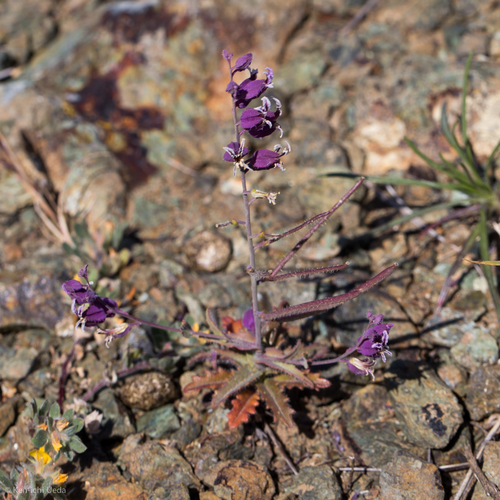
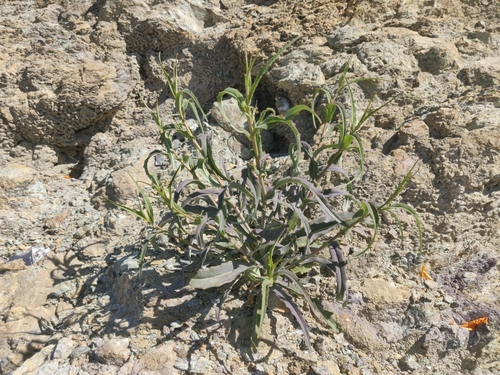
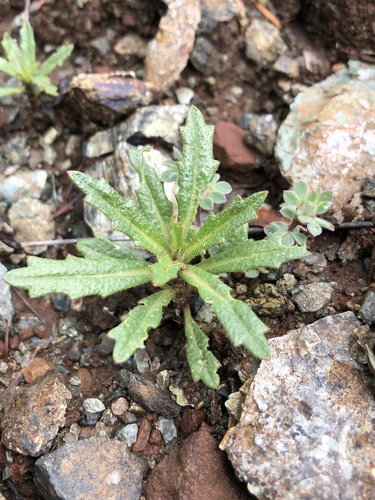
Bristly Jewelflower
Streptanthus glandulosus subsp. glandulosus
Care
full sun, part shade
0–0ft tall
Resistant
Friendly
Prized
Coast Ranges from Monterey County to Marin County, below 2000 ft elevation, in grasslands and chaparral
Care Guide
Planting
Plant your bristly jewelflower in full sun where it will get at least 6 hours of direct light daily. This California native thrives in the dry, well-draining conditions of grassland, chaparral, and woodland habitats, so choose a spot with excellent drainage and avoid areas that stay wet. Since it's an annual herb, you can plant it in spring to establish before summer heat arrives.
After Planting
Water regularly during your plant's first growing season to help it establish, then gradually reduce watering as it matures - it's adapted to California's dry conditions and won't need supplemental water once established. This is a low-maintenance plant rated moderate for ease of care, and it's fully deer resistant, so you can relax on that front. The biggest mistake people make is overwatering; remember this plant evolved in chaparral and grasslands where moisture is scarce, so err on the dry side rather than the wet side.
Visit Calscape for more information about Bristly Jewelflower
Wildlife Supported
Insects

Larval host plant for caterpillars in spring broods

Larval host plant for caterpillars; critical for breeding

Spring foraging during plant flowering
Adult nectar and pollen feeding during bloom period

Early season nectar source when plant blooms

Pollen foraging for larval provisions

Adult nectar foraging during flowering

Early spring pollen collection
+2 more species