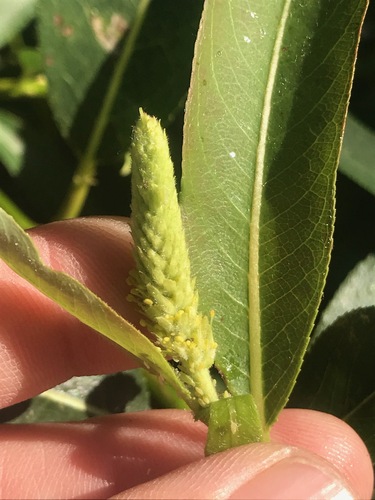
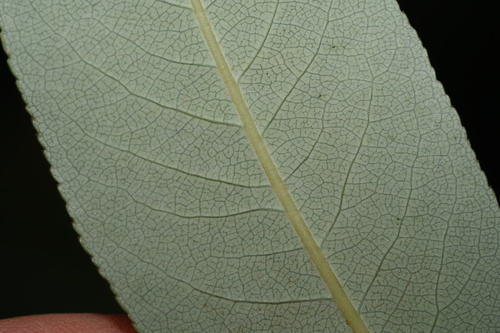
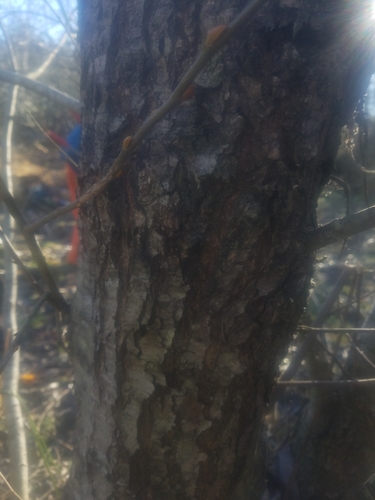
Pacific Willow
Salix lasiandra var. lasiandra
Care
part shade
high
Slow, Standing; Tolerates a variety of soils but prefers alluvial soil.
3–30ft tall
Mar-May
Deciduous
Supports up to 328 butterfly and moth species in Mediterranean California
Riparian corridors and streamside vegetation of the Sierra Nevada and northern California from Kern to Modoc County, below 6000 ft elevation
Care Guide
Planting
Plant Pacific Willow in a location with partial shade and consistently moist to wet soil - this is not a plant for dry gardens. It thrives in slow-draining or even seasonally standing water and prefers alluvial soils, so if you have a bioswale, pond edge, or other wet area on your property, that's your ideal spot. Space it with room to spread, as this is a suckering willow that will extend its roots into any sufficiently moist area nearby. Plant in fall or early spring before active growth begins.
After Planting
Keep the soil moist through your first summer; weekly watering is a good baseline unless you have natural wet conditions. Once established (by year two), Pacific Willow will largely maintain itself through moisture in the soil and spring rains - this is a plant for wet habitats, not one you'll be hand-watering long-term. It's deciduous and will drop its leaves in winter. The #1 mistake is planting it in a normal garden bed expecting to water it like other trees; if your soil dries out regularly, this willow will struggle or need constant supplemental water, which defeats the purpose of growing a native wetland plant.
Wildlife Supported
Insects

Caterpillar food plant from spring through summer

Early spring host plant for caterpillars; one of first willows to leaf out

Preferred larval host plant for multiple generations May-September

Caterpillars feed on foliage in spring through early summer

Larvae bore through wood and bark during growing season

Larval feeding in xylem and phloem

Caterpillars feed on foliage in spring

Spring foraging on catkins and early flowers
+1 more species