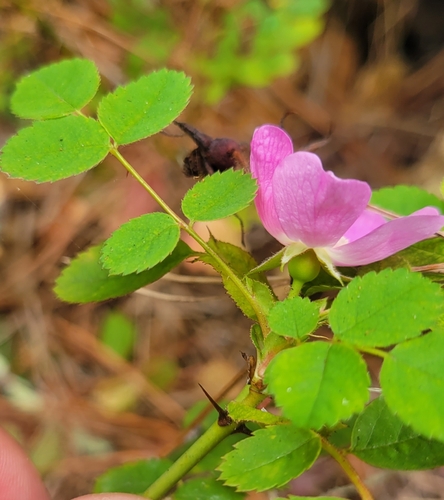
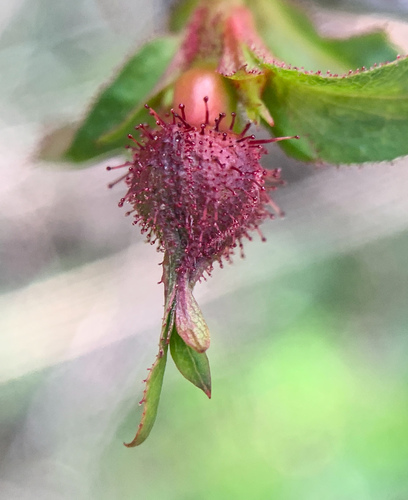
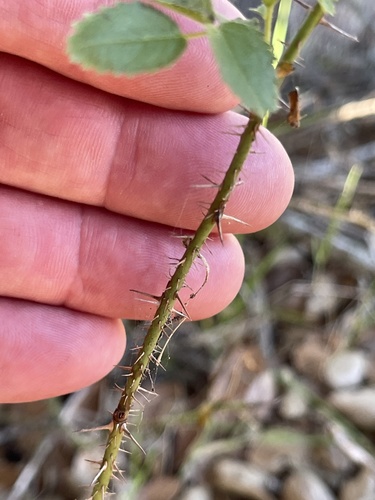
Bald-hip Rose
Rosa gymnocarpa
Care
full sun, part shade
low
Medium; Tolerates clay but does best in moist loamy soil.
3–7ft tall , 6–9ft wide
Mar-May
Evergreen
Resistant
Friendly
Yes
Prized
Rose hips used for tea, jams, and syrups; high in vitamin C
Supports up to 99 butterfly and moth species in Mediterranean California
Coniferous forests and mixed woodlands of the Sierra Nevada and northern mountains from Kern County to the Oregon border, 3000-8000 ft elevation
Care Guide
Planting
Plant your Bald-hip Rose in fall or winter (the Bay Area's wet season) in a spot with full sun or part shade - it actually prefers dappled shade over intense afternoon sun. Space it with good air circulation and ensure the soil drains well; while it tolerates clay, it performs best in moist loamy soil with medium drainage. Dig a hole as deep and wide as the root ball, backfill with native soil mixed with compost if your soil is heavy clay, and water in well at planting.
After Planting
Water weekly through your first summer, then taper to once a month or less once established - this is a drought-tolerant plant that will suffer from overwatering. Skip pruning in year one and let it settle in; after the spring blooms fade (March–May), you can remove dead wood or shape it lightly if needed. The biggest mistake Bay Area gardeners make with this plant is overwatering it, especially in the rainy winter months - let the soil dry out between waterings and resist the urge to fuss with it, since it's adapted to our dry summers.
Wildlife Supported
Insects

Forages on rose flowers June-August for nectar and pollen

Larval host plant; caterpillars feed on new foliage April-June

Fungal pathogen; spore production cycles with host phenology

Spring foraging on pollen

Larval host plant; caterpillar feeding stage
Spring forager for pollen provision

Collects nectar and pollen when flowers available

Summer foraging resource
+5 more species