Hillside Gooseberry
Ribes californicum var. californicum
Care
part shade
very low
Fast, Medium; Tolerates sandy soil.
3–8ft tall , 2–6ft wide
Jan-Dec
Deciduous
Resistant
Friendly
Prized
Berries eaten fresh, traditional Indigenous food
Oak woodland and chaparral of the Coast Ranges and Sierra Nevada foothills from Kern to Mendocino County, 1000-4000 ft elevation
Care Guide
Planting
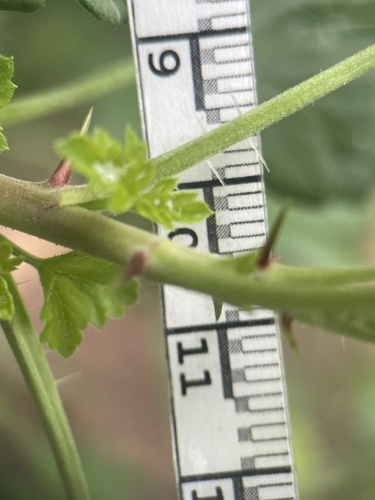
Plant your Hillside Gooseberry in part shade with fast-draining or medium-draining soil; it tolerates sandy or rocky soil well. Space it 2 to 6 feet wide depending on your available room. Remember that this shrub has spines on its branches, so choose a location where you won't brush against it regularly. Plant in fall or winter when the plant is dormant for best establishment.
After Planting
Water weekly during your first summer, then taper off as the plant establishes - by the second year, it should need water no more than once a week even during summer heat. Once established, this is a very low-water shrub that thrives on neglect; the #1 mistake is overwatering, which this California native doesn't need or want. The plant is deciduous and will drop its leaves in winter, which is normal. Prune only as needed to shape it or remove dead wood, preferably in late winter before spring flowers appear.
Visit Calscape for more information about Hillside Gooseberry
Endangered & Threatened Species Supported
California state threatened species
California Species of Special Concern
Wildlife Supported
Birds

Year-round resident in California; relies on currant flowers for nectar in late winter/early spring when few other sources available
Insects

Larvae feed on Ribes foliage; host plant for California native butterfly

Spring and early summer foraging on currant flowers; native California pollinator

Early spring pollen collection for larval provisions; ground-nesting native bee
Larvae develop within ripening currant berries; species-specific host relationship

Larval feeding on currant leaves during spring growth
Fungal pathogen lifecycle dependent on Ribes as alternate host; ecological regulator

Forages on flowers during blooming period; important pollinator

Spring flowering period; adult nectar foraging; important native pollinator
+3 more species