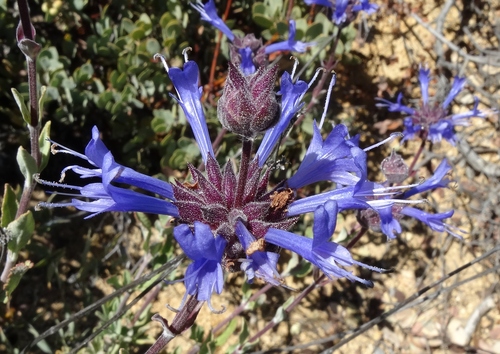
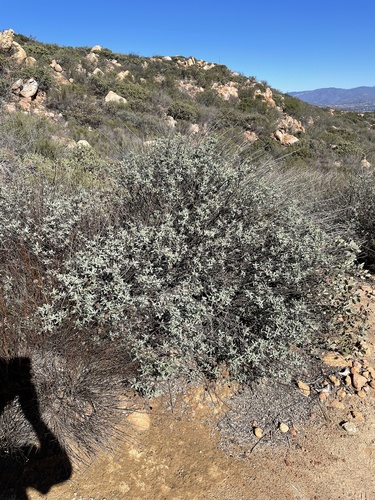
Cleveland Sage
Salvia clevelandii
Care
full sun
very low
well-drained; no clay; no summer water
3–5ft tall , 3–5ft wide
May-Aug · violet-blue
Evergreen
Resistant
Friendly
Yes
Prized
San Diego County and northern Baja California; widely adapted
Whorled clusters of fragrant violet-blue flowers
Intensely fragrant; 'Winnifred Gilman' is outstanding cultivar
Care Guide
Planting
Plant Cleveland sage in full sun on well-drained soil - avoid clay and heavy, poorly draining spots. Position it on a flat, slope, or bluff where water won't pool. Space according to the mature size of 3–5 feet tall. Plant in fall or early spring to give it time to establish before summer heat.
After Planting
Water weekly during your first summer, then taper to once monthly by mid-summer of year one. Once established (year two onward), stop summer irrigation entirely - this plant survives on rainfall alone and actually prefers drought. Your biggest mistake will be overwatering; soggy soil kills this plant faster than anything else. In spring, you can lightly prune to shape it, but the plant is naturally low-maintenance and will bloom reliably from May through August without fussing.
Endangered & Threatened Species Supported
California Species of Special Concern; monarch populations declining
Wildlife Supported
Birds

Primary nectar source during breeding season (May-Aug); critical energy source for nesting females

Breeding season nectar source (May-Aug); fuels courtship displays and chick-rearing

Desert breeding hummingbird; exploits sage nectar during breeding season (May-Jul)
Insects

Spring dispersal and fall migration staging (May-Jun, Aug-Sep); critical nectar for long-distance flight

Multiple broods (May-Sep); adult nectar source

Spring and summer broods (May-Aug); adult nectar foraging

Adults nectar on sage (May-Aug); breeding resident in California