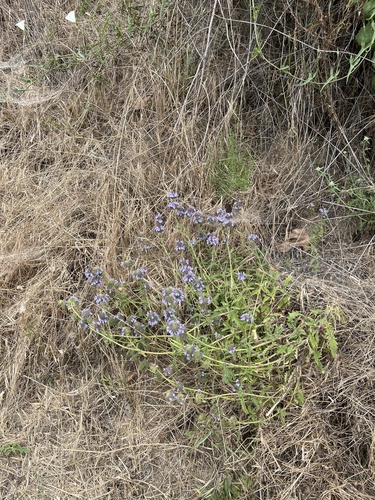
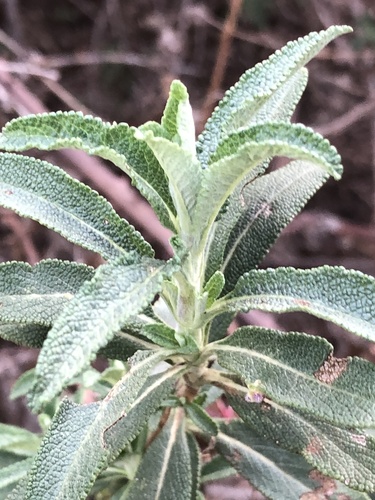
Black Sage
Salvia mellifera
Care
full sun
very low
well-drained; tolerates poor rocky soil
3–6ft tall , 3–6ft wide
Apr-Jul · white, pale lavender
Evergreen
Resistant
Friendly
Yes
Prized
Coastal sage scrub from Contra Costa County to Baja California
Whorled clusters of white to pale lavender flowers along stems
Aromatic foliage; one of the best native bee plants
Care Guide
Planting
Plant black sage in full sun with well-draining soil - it tolerates poor, rocky soil just fine, so don't stress about amending. Space plants 6–10 feet apart since they can reach 6 feet tall and 10 feet wide at maturity. Plant in fall or winter when the Bay Area gets rain, which helps the plant establish roots without extra watering from you.
After Planting
Water weekly for the first summer to help it establish, then wean off completely once established - by year two, black sage needs zero supplemental water, even during drought. Expect the small dark green leaves to curl during summer dry spells; this is normal and not a sign of distress. Prune after flowering to shape the plant and encourage bushiness. The #1 mistake people make is overwatering established plants, which can lead to root rot in our wet winters - once your black sage is settled in, let it fend for itself.
Wildlife Supported
Birds

Primary nectar source during Apr-Jul bloom; critical for breeding season energy demands

Seeds consumed post-bloom Jul-Sep; supports breeding and molt nutrition
Insects

Outstanding honey plant Apr-Jul; produces excellent surplus honey

Apr-Jul bloom period; spring/summer foraging for colony provisioning

Spring-summer visitation Apr-Jul; nectar and pollen for provisioning

Spring specialist; uses pollen for larval provisions Apr-May

Apr-Jul bloom; early season forager for queen establishment

Spring-summer pollen collector; larval host plant specialist

Pollen feeder Apr-Jul; adults and larvae benefit from abundant pollen

Apr-Jul nectar source; spring migration staging fuel
+4 more species
Mammals

Post-bloom seed collection Jul-Sep; food storage for year-round use