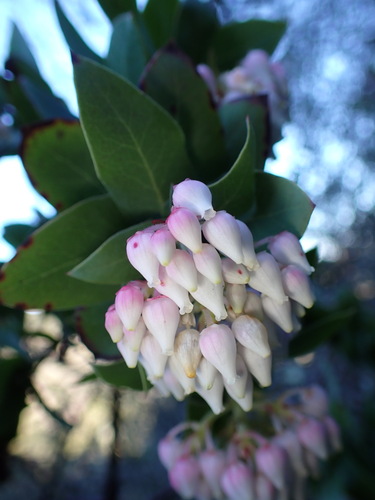
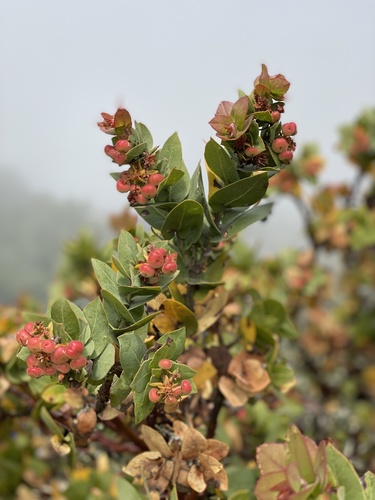
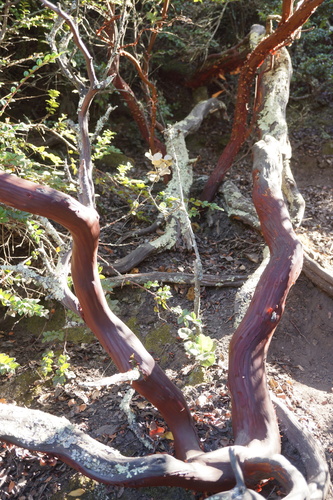
Alameda Manzanita
Arctostaphylos pallida
Care
full sun
.
6–13ft tall
Evergreen
Resistant
Friendly
Berries made into cider drink, traditional Indigenous use
Supports up to 68 butterfly and moth species in Mediterranean California
Chaparral endemic to the Ohlone region of Alameda and Santa Clara counties from 500-2000 ft elevation.
Care Guide
Planting
Plant your Alameda Manzanita in full sun - this is non-negotiable for healthy growth. The Calscape data doesn't specify soil type or drainage requirements, so research your local conditions or contact a Bay Area native plant nursery for soil guidance specific to your site. Space it to accommodate its mature size of 6 to 13 feet tall, and plan to plant in fall or early winter to establish before summer drought.
After Planting
After planting, water regularly through your plant's first summer to establish a deep root system, then transition to drought tolerance - typical of native manzanitas once established. Prune minimally and only after flowering ends (March or later), as manzanitas don't regrow from old wood like some shrubs do. Year one is about root establishment; expect slower visible growth than you might with non-native plants. The #1 mistake is overwatering once the plant is past its first season - Alameda Manzanita is adapted to our dry summers and will decline in wet conditions.
Endangered & Threatened Species Supported
California Species of Special Concern; population fluctuations noted
Wildlife Supported
Birds

Early season nectar; supports breeding season energy demands
Insects

Early season nectar source when flowers bloom

Larval host plant; caterpillars feed on manzanita foliage in spring
Dense evergreen foliage provides year-round cover for wildlife

Adult feeding on manzanita flowers

Scale insect parasitizing manzanita stems and branches

Larval host plant; caterpillars utilize manzanita leaves

Spring nectar foraging on manzanita flowers
Mammals

Browse on evergreen foliage during fall and winter months