Bigberry Manzanita
Arctostaphylos glauca
Care
full sun
very low
Fast, Medium; Can tolerate heavy soil on slopes but does best in well-drained soil. Tolerates serpentine soil.,Tolerates sodic soil..
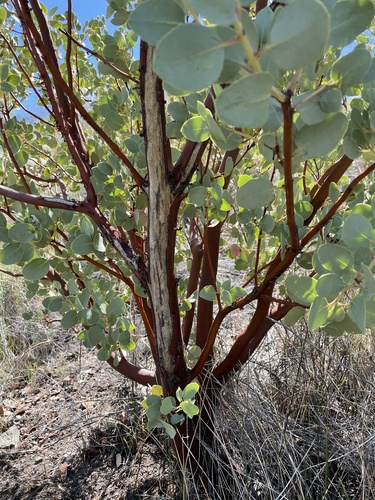
3–20ft tall , 6–20ft wide
Jan-Dec
Evergreen
Resistant
Friendly
Berries made into cider drink, traditional Indigenous use
Supports up to 68 butterfly and moth species in Mediterranean California
Chaparral of the Transverse and Peninsular Ranges in southern California from 1000-4000 ft elevation, south to Baja California.
Care Guide
Planting
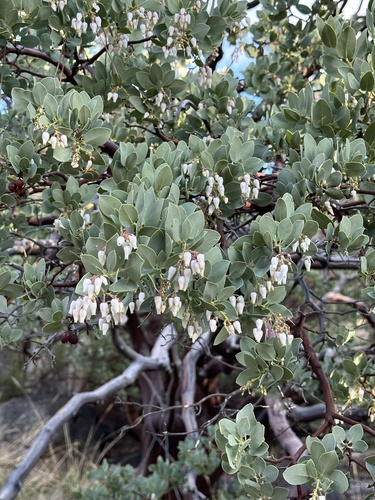
Plant your bigberry manzanita in full sun or part-shade, ideally on a rocky slope and away from south-facing exposures. It needs fast-draining soil and will do best if you place rocks around the base of the plant at planting time. The soil should be acidic and well-draining, though this manzanita can tolerate serpentine and even heavy soils on slopes. Space according to your desired mature size, keeping in mind it can reach 3 to 20 feet tall and 6 to 20 feet wide.
After Planting
Water regularly during the first year to establish the plant, but this is critical: after year one, summer water will often kill it - limit summer irrigation to once a month or less. Once established, treat this as a very-low-water plant and let our Bay Area summer drought do most of the work. The #1 mistake people make is overwatering in summer thinking they're helping; resist the urge and trust that this native shrub is built for dry conditions. This is a slow-growing plant that can live 100+ years, so patience now pays off with decades of white spring flowers and wildlife visitors.
Visit Calscape for more information about Bigberry Manzanita
Wildlife Supported
Birds

Primary nectar source, especially critical during breeding season (Dec-Jun) and molting period
Insects

Host plant for larval development April-June; caterpillars defoliate branches

Disease host; can cause leaf spots and branch cankers; winter spore production
Specialist pollen forager; critical early spring food source for nesting females
Nest-building habitat in dense branches; year-round shelter and foraging grounds

Early spring nectar source for queen emergence and colony establishment

Larval host plant; caterpillars feed on foliage in late spring-early summer

Larval host plant; caterpillars feed on new foliage April-May

Sap-feeding aphid that colonizes stems and leaves; year-round presence
+4 more species