California Live-oak
Quercus chrysolepis
Care
full sun, part shade
very low
Medium; Found in a wide variety of soils in various parts of the state.
30–90ft tall , 30–60ft wide
Jan-Dec
Evergreen
Resistant
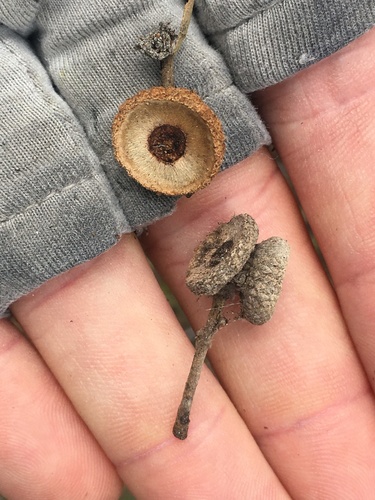
Acorns leached and ground into flour for traditional food
Supports up to 275 butterfly and moth species in Mediterranean California
Chaparral, oak woodlands, and mixed conifer forests throughout California mountains and foothills from 1000-7000 ft elevation, from Oregon to Baja California.
Care Guide
Planting
Plant your canyon live oak in full sun in a location with medium drainage - this tree adapts to a wide variety of soils, so don't overthink the soil type. Fall through early spring is the best planting window in the Bay Area. Space it with mature size in mind (30–90 feet depending on your microclimate), and avoid planting in areas prone to standing water, as this oak thrives in well-draining conditions despite its affinity for creek-side habitats.
After Planting
Water weekly for the first summer to establish roots, then dramatically reduce frequency - by year two, limit irrigation to a maximum of twice per month once established, since this is a very low-water tree. Your biggest mistake will be overwatering; canyon live oak is drought-tolerant and resents wet feet. Minimal pruning is needed - this tree regenerates vigorously on its own, and you can remove damaged branches in late winter if necessary.
Visit Calscape for more information about California Live-oak
Endangered & Threatened Species Supported
California Species of Special Concern
Wildlife Supported
Birds

Primary acorn dispersal agent; caches acorns Sep-Feb for overwintering food
Mammals

Harvests and caches acorns; important seed dispersal and predation Sep-Feb
Insects

Major larval host; caterpillar defoliation Apr-Jun; can reach outbreak densities

Larval host plant; caterpillars feed on new foliage Mar-Jun

Larval host plant; caterpillars feed on new oak leaves Apr-Jul

Fungal pathogen affecting oak health; spreads via spores in wet conditions

Uses oak canopy and branches for hunting and shelter; egg cases laid on bark

Larval host plant; caterpillars feed on oak foliage May-Aug

Larval host plant; caterpillars feed on oak foliage

Larval host plant; wood-boring beetle larvae develop in wood and bark
+2 more species