Blue Witch
Solanum umbelliferum
Care
full sun, part shade
low
well-drained
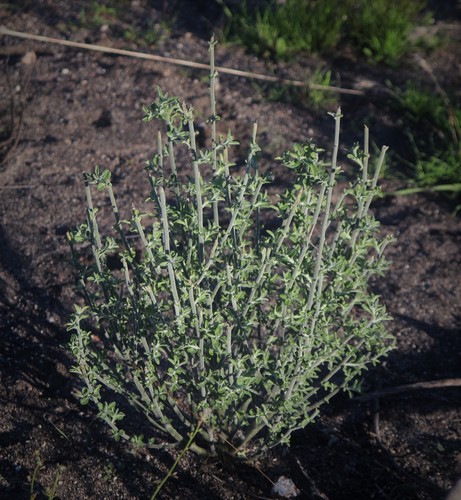
1–3ft tall , 1–3ft wide
Feb-Jun · blue, purple
Evergreen
Resistant
Friendly
Prized
California Coast Ranges and Sierra foothills
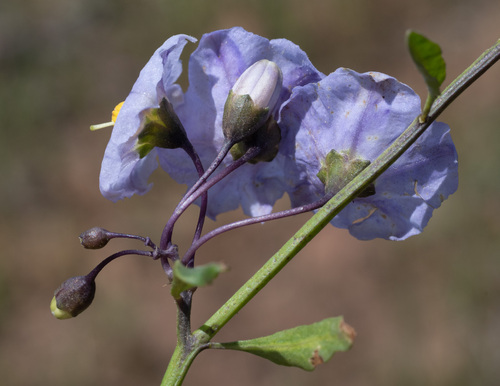
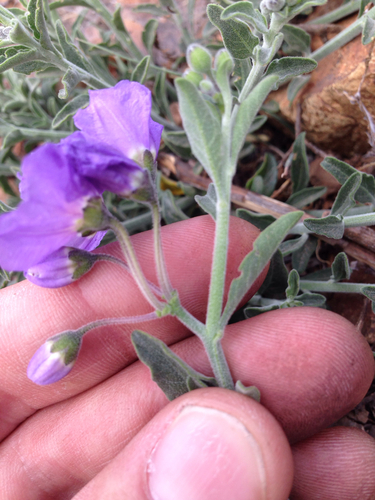
Clusters of blue-purple flowers with yellow stamens, nightshade family
Long bloom season; attractive small shrub; all parts toxic if ingested
Care Guide
Planting
Plant your Blue Witch in full sun with well-drained soil - it tolerates a wide range of soil types, including poor, saline, and sodic soils, so don't worry too much about amending. The best planting window is fall or early spring. Space plants about 3 feet apart since they'll grow to 1–3 feet tall and have a mounding habit.
After Planting
Water weekly for the first summer to establish roots, then back off to once a month or less during summer once established. Here's the key: Blue Witch is drought-tolerant and will survive on neglect, but if you give it occasional summer water it'll stay leafy and keep blooming through spring and into early summer; without water it goes summer deciduous (loses its leaves). The #1 mistake is overwatering - this plant wants to be dry, so let the soil dry out between waterings and never water in fall or winter. No pruning needed unless you want to shape it.
Endangered & Threatened Species Supported
Listed under California ESA; range has contracted significantly
Wildlife Supported
Insects

Spring foraging period Feb-May

Spring bloom nectar source

Larval host plant; multiple generations spring-summer

Primary nectar source Feb-Jun bloom period

Host plant for caterpillar development spring-early summer

Early spring foraging Feb-Apr

Early spring pollen collection

Spring nesting season foraging
+5 more species
Birds

Berries consumed year-round, especially important summer-fall

Important fruit resource especially in dry season

Autumn and winter berry source during migration and overwintering