← Back to results

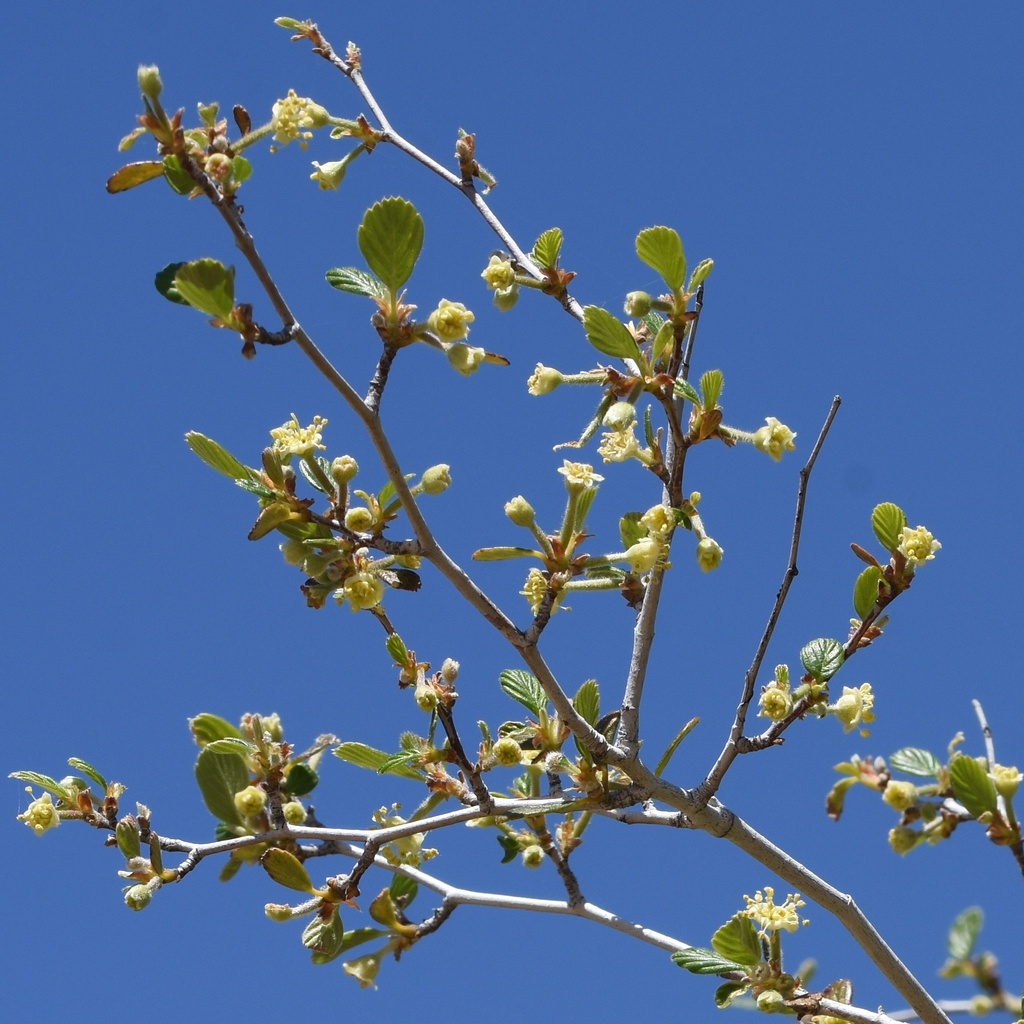
Birch-leaf Mountain-mahogany

Cercocarpus betuloides var. betuloides

Care

Sun

part shade, full sun

Water

very low

Soil

Fast, Medium, Slow; adaptable. Tolerates serpentine soil..

Size

8–20ft tall , 10–12ft wide

Bloom

Jan-Dec

Foliage

Evergreen

Deer

Resistant

Native Range

Chaparral and oak woodlands of the Sierra Nevada foothills, Coast Ranges, and transverse ranges from 1000-6000 ft elevation, extending south to San Diego County.

Care Guide

Planting

Plant your Mountain Mahogany in full sun or partial shade with fast to medium drainage - it's adaptable to most soil types, including poor or serpentine soils, so drainage matters more than fertility. Space it according to its mature size (8–20 feet tall) and your desired effect; it works well as a hedge or privacy screen and responds well to pruning if you need to keep it narrow. Plant in fall or winter to take advantage of the rainy season for establishment. Avoid planting in areas that stay wet, as this plant prefers drier conditions.

After Planting

Water weekly through your first summer, then reduce to once monthly (or less) once established - this is a very low-water plant and overwatering is the most common mistake. You can prune lightly or heavily depending on your needs; it responds well to both and can even be cut to the ground for rejuvenation. Year one focuses on root establishment; after that, this fast-growing shrub becomes increasingly drought-tolerant and requires minimal maintenance. It's evergreen and tolerates cold down to 20°F, so no special winter care is needed in the Bay Area.

Visit Calscape for more information about Birch-leaf Mountain-mahogany

Wildlife Supported

Insects

Foliage · Spring

Larvae feed on emerging foliage April-June, form characteristic silk tents

Larval Host · Spring

Important larval host; caterpillars feed on new growth

Larval Host · Spring

Host plant for multiple subspecies; larvae feed on spring foliage

Larval Host · Year-Round

Parasite/host plant relationship; mistletoe berries provide winter food for birds

Pollen · Spring

Native bee collecting pollen during blooming/budbreak period

Pollen · Spring

Early season pollen source for nesting queens and workers

Larval Host · Spring

Host plant for caterpillars; adults present spring through fall

Larval Host · Spring

Caterpillars feed on foliage; larvae gregarious on host plant

+5 more species

Where to Buy

East Bay Wilds

2110 Eighth St, Suite 202, Berkeley

Fri 9:30am-4pm (occasional Sat, call ahead)

1.5 mi (510) 409-5858 Website
Native Here Nursery

101 Golf Course Dr, Tilden Regional Park, Berkeley

Sat 10am-2pm

3.0 mi (510) 549-0211 Website