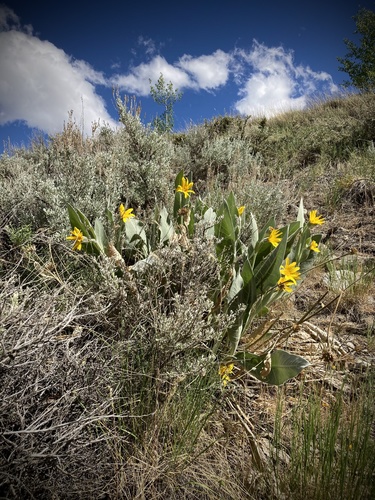
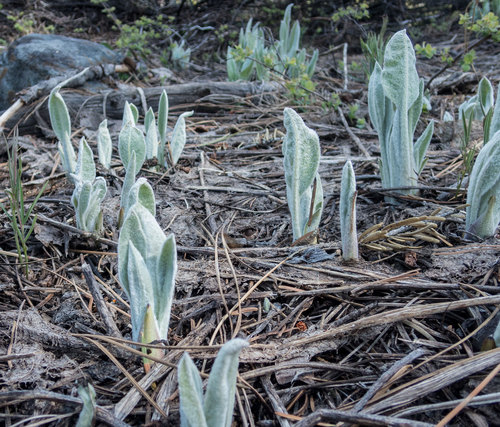
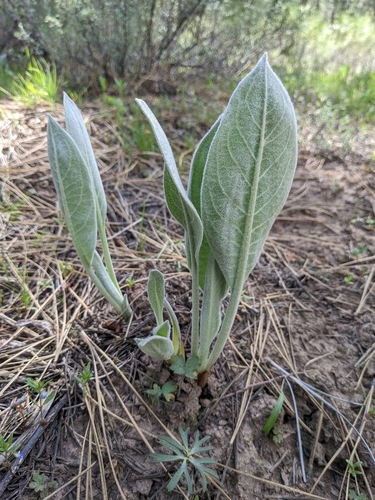
Woolly Mule's Ears's
Wyethia mollis
Care
part shade, full sun
very low
Fast, Medium, Slow; Tolerates a variety of soils, often rocky.
2–2ft tall , 3–3ft wide
Mar-Aug
Deciduous
Resistant
Friendly
Prized
Seeds ground into flour; roots eaten cooked. Traditional Indigenous food
Grasslands and foothill woodlands of the southern Sierra Nevada, Kern County, and southern Coast Ranges, 1500-3500 ft elevation, endemic to south-central California.
Care Guide
Planting
Plant Woolly Mule's Ears in full sun or part shade - afternoon shade is actually helpful, especially if you're in a warmer part of the Bay Area. It tolerates a variety of soils including rocky ground, so don't fuss too much about amending; just make sure your soil drains well (fast to medium drainage is ideal). Plant in spring or early fall to give it time to establish before summer heat or winter cold.
After Planting
Water weekly during your first summer, then cut back to once a month or less once established - this plant thrives on very low water and needs almost no summer irrigation after year one. Expect slow growth and a deciduous plant that goes dormant; this is normal and not a sign of trouble. The biggest mistake people make is overwatering: treat it like the low-water Sierra native it is, and resist the urge to coddle it through dry spells.
Visit Calscape for more information about Woolly Mule's Ears's
Endangered & Threatened Species Supported
Vandyk's bumblebee; California state endangered; species of special concern
Listed as Endangered under CESA
California Species of Special Concern
Wildlife Supported
Insects

Early season pollen source for colony establishment

Primary larval host plant, caterpillars feed on leaves
Spring specialist, pollen provisioning for larvae

Spring foraging during queen and worker emergence

Endoparasitic relationship; develops within plant tissues

Adult beetle foraging on flowers for pollen and nectar

Host plant for early instar caterpillars in montane regions

Larval host plant for multiple generations in spring/early summer
+1 more species