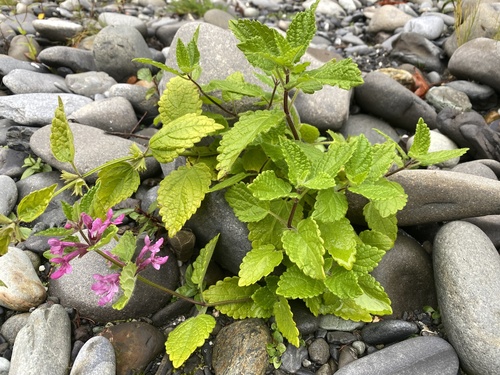
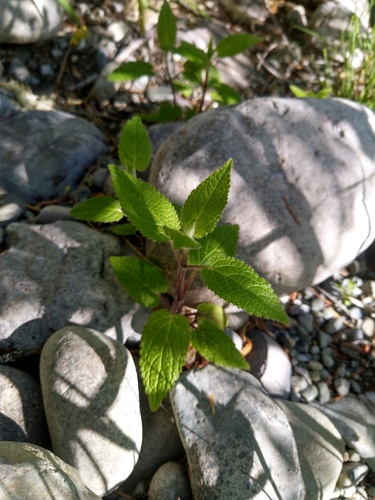
Coastal Hedgenettle
Stachys chamissonis
Care
part shade
moderate
3–8ft tall
Resistant
Friendly
Yes
Prized
Tubers boiled or roasted; traditional Indigenous food
Coastal scrub and grasslands from Sonoma County to Santa Barbara County, below 500 ft elevation, endemic to the central California coast.
Care Guide
Planting
Plant your coastal hedgenettle in part shade, where it will thrive in the Bay Area's coastal conditions. Space plants generously since this mint can reach 3–8 feet tall and spreads as a vigorous grower. While soil requirements aren't specified in the available data, choose a location with moderate moisture and good drainage to match its native habitat preference for moist coastal areas.
After Planting
Water moderately through the first growing season to establish the plant, then reduce frequency as it matures and becomes more drought-tolerant. Expect this to be a moderate-care plant - it's deer resistant and doesn't require heavy pruning, though you can cut back stems to manage height and shape. Year one may feel slow, but once established, coastal hedgenettle is a hardy performer; the biggest mistake is overwatering, which the plant doesn't need once settled in.
Visit Calscape for more information about Coastal Hedgenettle
Wildlife Supported
Birds

Year-round resident in coastal California; critical nectar source during winter breeding season
Spring migration and breeding season nectar source
Insects

Early spring forager; colony establishment and early brood rearing

Multi-generational spring and early summer foraging

Spring bloom synchronization with colony growth phase

Spring nesting and provisioning period

Spring foraging for nest provisioning

Spring emergence and breeding season nectar source

Year-round leaf mining activity in coastal California

Fungal pathogen; opportunistic host relationship
+2 more species