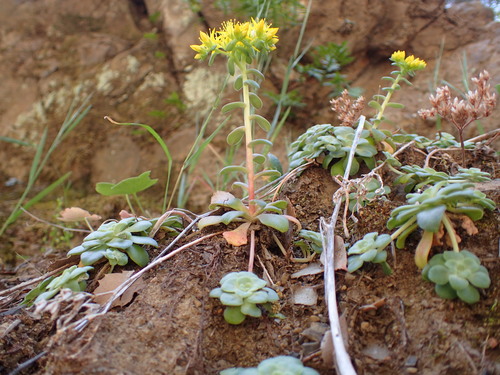
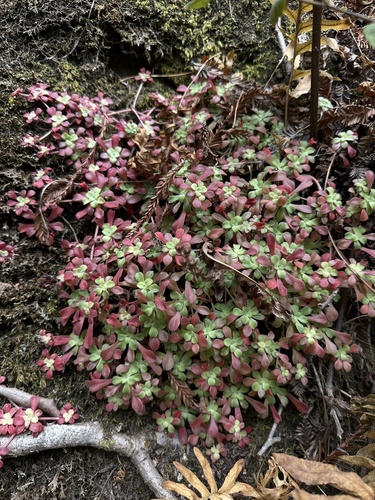
Pacific stonecrop
Sedum spathulifolium
Care
part shade
low
Fast; Rocky or gravelly.
0–0ft tall , 1–3ft wide
Mar-Aug
Evergreen
Resistant
Friendly
Leaves eaten raw in salads or cooked as greens
Coastal bluffs, rocky areas, and chaparral of coastal California from Humboldt County to San Diego County, below 2000 ft elevation, extending to southern Oregon.
Care Guide
Planting
Plant Pacific stonecrop in part shade with fast-draining, rocky or gravelly soil - amend with gravel if your garden soil compacts easily. The most critical step: plant it at an angle so water doesn't collect on the crown, which will cause rot. Plant in spring or fall to give it time to establish before the growing season.
After Planting
Water weekly for the first summer to help it establish, then cut back to once a month or less during the dry season - this plant thrives on neglect once mature. Don't be alarmed if it shrivels somewhat in summer; this is normal behavior. The #1 mistake Bay Area gardeners make is overwatering or planting it flat on the ground where water pools; treat it like the cliff-dwelling succulent it is and err on the side of dry.
Endangered & Threatened Species Supported
Listed under ESA; California state threatened status
California endangered species; native Oregon bee species
Wildlife Supported
Insects

Host plant for butterfly larvae; early spring caterpillar development

Early season nectar source for queen establishment and colony founding

Multi-generational host plant; larvae feed on succulent tissues

Larval host plant; overwinter as larvae within plant tissues

Critical pollen source for larval provision during nesting season

Spring bloom period provides early-season forage for colony development

Spring nectar and pollen source during early foraging season

Spring pollen provision for brood development
+4 more species