Coast Live Oak
Quercus agrifolia
Care
full sun, part shade
very low
well-drained, clay tolerant
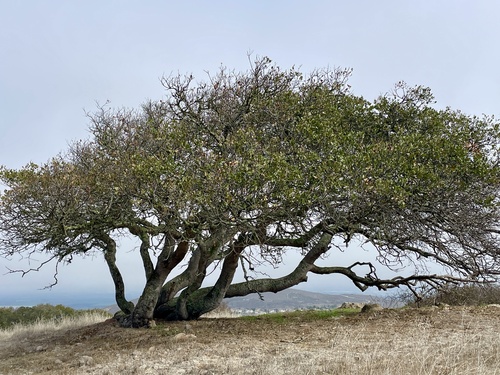
20–70ft tall , 20–70ft wide
Evergreen
Resistant
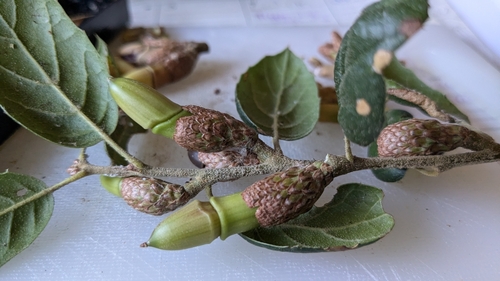
Acorns leached and ground into flour for traditional food
Supports up to 275 butterfly and moth species in Mediterranean California
Coastal California from Mendocino County to northern Baja California
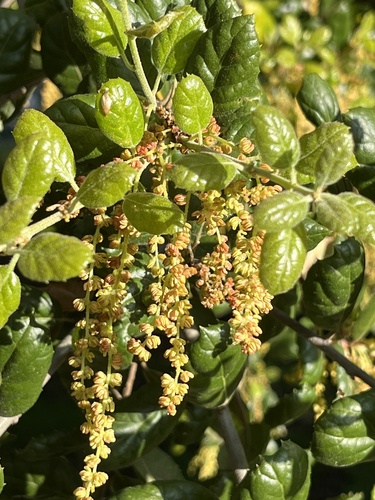
Insignificant catkins
Iconic East Bay tree; do not irrigate within dripline of mature trees
Care Guide
Planting
Plant your Coast Live Oak in full sun with well-draining soil - it tolerates clay and adapts to various soil types, though it prefers deep loam. Choose a location where its roots can be shaded once established; you'll mulch around the young tree or plant native understory plants like Toyon or Manzanita nearby to keep roots cool. Space it with room to grow, since mature trees reach 30 to 80 feet tall. Fall through early spring is ideal for planting in the Bay Area.
After Planting
Water weekly for the first year after planting, then cut back to once a month until your oak reaches about 10 feet tall. Once established, avoid watering during summer months - this tree is very low-water and actually prefers drier conditions. The #1 mistake is overwatering or fertilizing: skip the fertilizer entirely, as oaks build their own soil fertility over time through leaf drop and naturally develop the fungi they need to thrive. Let fallen leaves stay on the ground as natural mulch.
Endangered & Threatened Species Supported
Western gray squirrel listed as Threatened under CESA; Species of Special Concern
California Species of Special Concern
California Species of Special Concern
California Species of Special Concern
Wildlife Supported
Birds

Stores acorns year-round in granary trees; creates and maintains woodpecker holes

Primary acorn disperser and cache-maker; critical for oak regeneration Sep-Nov

Acorn harvesting and caching Sep-Nov

Acorn consumption during fall migration and overwintering Sep-Mar

Acorn foraging and consumption Sep-Dec

Nesting in dense oak canopy for concealment Mar-Jun

Nesting habitat in large oak cavities and branches; year-round resident

Nesting in oak cavities Feb-Jun
Mammals

Acorn harvesting and caching Sep-Nov; essential seed disperser and predator

Acorn foraging and caching Sep-Nov for winter food stores

Acorn harvesting and caching Sep-Oct; overwinters on stored acorns
Browse on leaves, twigs, and acorns year-round; important winter browse
Insects

Native bee foraging on oak-associated flowers and catkins

Larval host plant; caterpillars defoliate oaks Mar-May

Pollen source from catkins and understory flowers during oak bloom Feb-Apr

Parasitic plant hosted on oak branches; supports specialized insects

Oak-specialist butterfly; larval development on coast live oak foliage