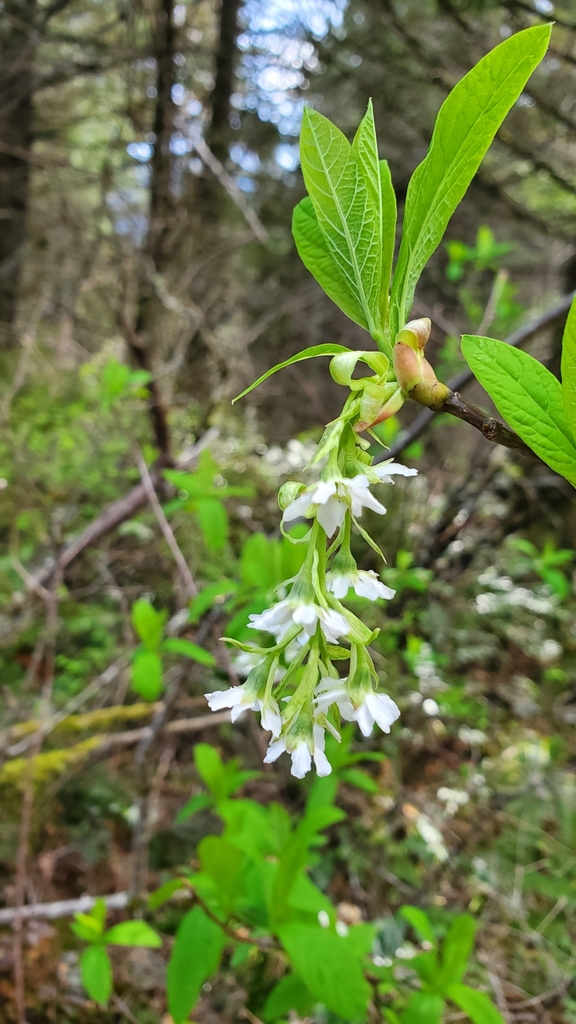
Oso berry
Oemleria cerasiformis
Care
part shade
low
Fast; Tolerates a variety of soils as long as adequate drainage is provided.
5–20ft tall
Mar-May
Prized
Berries eaten raw or cooked; traditionally used by Indigenous peoples
Riparian woodlands and understory of mixed evergreen and oak woodlands from Humboldt County to San Diego County, below 4000 ft elevation, extending to southern Oregon.
Care Guide
Planting
Plant your osoberry in partial shade with well-draining soil - this is non-negotiable, as it won't tolerate poor drainage. It's flexible about soil type otherwise, so amend heavy clay with compost or sand if needed. Plant in fall or early spring to give it time to establish before summer heat. Space it 4-6 feet from other plants, as it will reach 5-20 feet tall depending on conditions.
After Planting
Water weekly through your first summer, then taper off as the plant establishes - osoberry is drought-tolerant once mature. In year two and beyond, water only during dry spells; overwatering is the main killer. The plant will lose its leaves in winter (it's deciduous), which is normal. Prune lightly after flowering in spring if needed to shape it, but this plant requires minimal fussing once established.
Wildlife Supported
Insects
Early spring nectar and pollen
Specialist forager on early season flowers
Spring flower visitor
Spring specialist on Rosaceae flowers
Spring nectar and pollen source
Early spring forager on oso berry flowers
Larval host plant for moth caterpillars
Larval host; wood borer in stems and branches
+4 more species