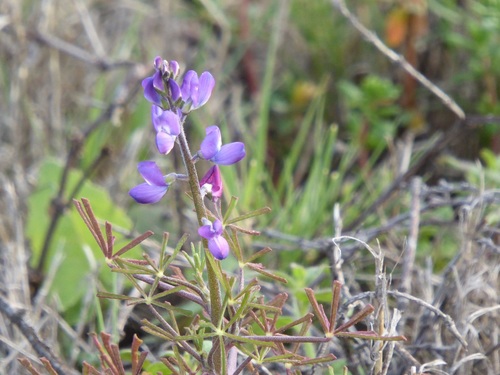
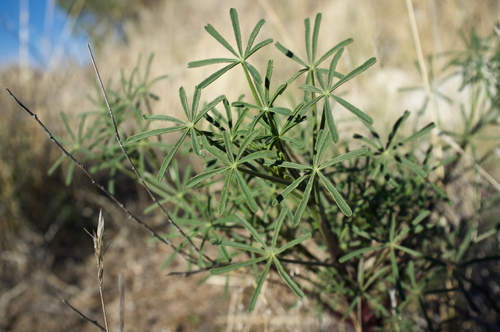
Collared Annual Lupine
Lupinus truncatus
Care
full sun, part shade
moderate
Fast, Medium, Slow; Adaptable. Tolerates serpentine soil..
1–2ft tall , 1–1ft wide
Jan-Dec
Friendly
Prized
Supports up to 74 butterfly and moth species in Mediterranean California
Central Valley and Sierra foothills from Shasta County to Kern County, below 2500 ft elevation, in grasslands and oak woodlands.
Care Guide
Planting
Plant Collared Annual Lupine in full sun with fast to medium drainage soil; it's adaptable and even tolerates serpentine soil, so drainage matters more than soil type. Plant in fall or early winter to catch the natural flowering season (winter through spring). Space plants about 12 inches apart to give them room to develop their compact 1- to 2-foot form. This is an annual, so you're starting fresh each year - direct seed or transplant in September through November for best results.
After Planting
Water moderately after planting to establish the plant, then cut back to no more than twice a month once established. Since this is an annual that flowers in winter and spring, expect it to decline as temperatures warm in late spring and summer - this is normal dormancy, not a sign of failure. The main mistake Bay Area gardeners make is overwatering; these plants evolved in dry chaparral and need well-draining soil and infrequent water to thrive.
Visit Calscape for more information about Collared Annual Lupine
Endangered & Threatened Species Supported
California Endangered Species Act listed
Wildlife Supported
Insects

early season nectar source for queen establishment and worker rearing

caterpillar host plant for larval development

primary host plant for caterpillar stages

spring forage for colony growth and reproduction
seed collection and storage for colony provisioning

herbivory on foliage during plant growth phase

larval development in plant tissues during active growth