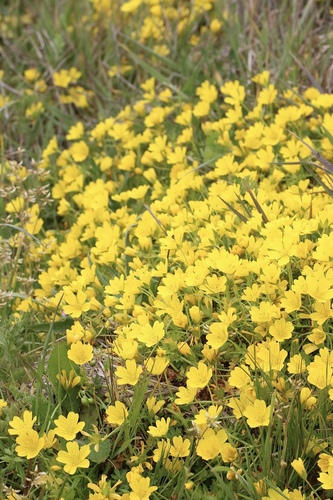
Common Meadow foam
Limnanthes douglasii
Care
full sun, part shade
low
Slow; Must have poorly drained clay soil.
2–2ft tall , 0–0ft wide
Mar-Aug
Friendly
Prized
Seeds eaten raw or roasted; traditionally used by Indigenous peoples
Central Valley and coastal foothills from Kern County to Shasta County, below 2000 ft elevation in vernal pools and grasslands, extending to Oregon.
Care Guide
Planting
Plant Common Meadowfoam in full sun in spring or autumn, spacing plants about 2 feet apart. This plant thrives in poorly drained clay soil - yes, the heavy Bay Area clay that kills most plants is exactly what it wants - so don't amend your soil or add drainage. Pair it with other moisture-loving sun plants like Creek Dogwood or Stream Orchid for a cohesive wet meadow look.
After Planting
Keep the soil moist through summer irrigation during establishment; once established, this plant needs only low water. After flowering (which runs March through August), cut the plant back. The #1 mistake is trying to improve your clay soil or add mulch for drainage - resist the urge, since meadowfoam actually requires that slow drainage to thrive. If you want more plants next year, let seed pods dry on the plant, collect them in fall, and sow seeds in spring or autumn, protecting fall sowings from frost; the plant will also happily self-seed, so be mindful of where those seeds land or you'll find meadowfoam growing in your lawn.
Visit Calscape for more information about Common Meadow foam
Endangered & Threatened Species Supported
California state threatened species
Wildlife Supported
Insects

Spring foraging resource for establishing colonies

Early spring pollen collection for provisioning brood cells

Early spring nectar and pollen source when meadow foam blooms

Host plant for larval development; spring provisioning

Spring pollen forage for provisioning nests

Spring nectar source during flight season

Spring nectar foraging during bloom

Larval host plant resource
+7 more species