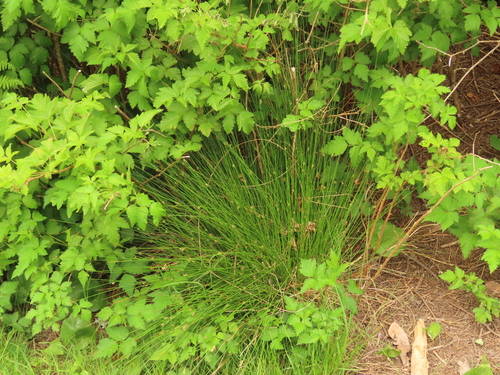
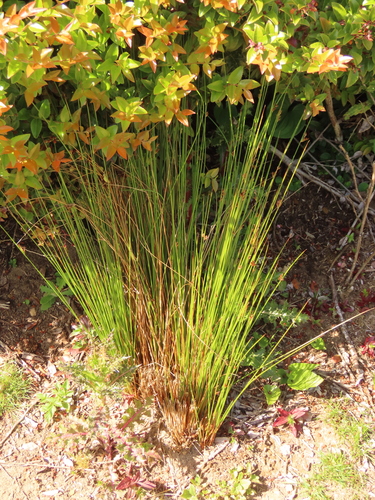
Coast Rush
Juncus hesperius
Care
full sun
moderate
Standing
4–4ft tall
Friendly
Coastal marshes and wetlands from Humboldt County to Monterey County, sea level to 300 ft elevation.
Care Guide
Planting
Plant Coast Rush in full sun in a location where it can stay consistently wet or even in standing water - this native thrives in boggy conditions that would challenge most plants. Choose a spot with poor drainage rather than fighting it; this rush actually prefers soil that stays moist year-round. Space plants according to your desired density, keeping in mind they'll reach about 4 feet tall.
After Planting
Water deeply and regularly during the first growing season to establish the plant, but Coast Rush actually prefers staying wet, so you won't need to wean it off water like you would with most California natives. The main mistake Bay Area gardeners make is trying to dry this plant out - resist the urge to improve drainage or reduce watering. Let it do what it evolved to do: grow in the wet places where few other plants will.
Endangered & Threatened Species Supported
Federally and state endangered; subspecies obsoletus is primary concern
Two-striped garter snake, Southern California endemic
California Species of Special Concern, habitat fragmentation and loss
California Species of Special Concern; Declining due to disease and habitat loss
Ornate shrew is a Species of Special Concern
Wildlife Supported
Birds

constructs woven nests within Juncus stems, year-round resident in coastal marshes

nests within dense rush stands April-June, platform construction in Juncus beds

attaches nests to Juncus stalks in coastal marsh habitats March-July

utilizes rush stands for insect gleaning during breeding season
Insects


Amphibians

uses moist Juncus understory for daytime refuge and breeding habitat margins
Mammals

incorporates Juncus stems into nest construction and debris lodges

uses dense rush cover for foraging and predator avoidance in coastal wetlands

forages for insects above Juncus stands during breeding season
Reptiles

shelters in dense Juncus cover adjacent to shallow water