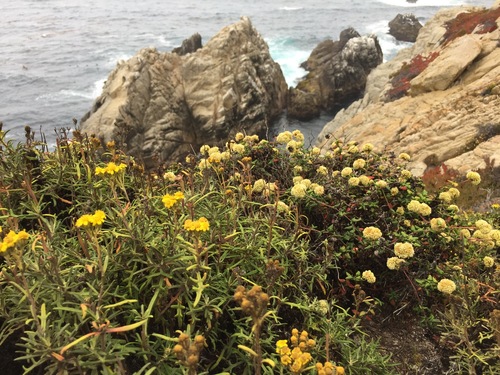
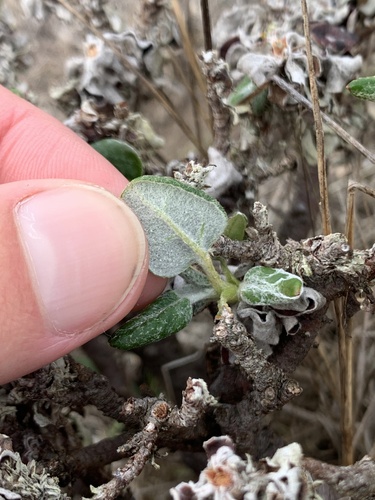
Seacliff buckwheat
Eriogonum parvifolium
Care
full sun, part shade
very low
Fast, Medium; Sandy rocky soils, sandstone.
1–3ft tall , 2–3ft wide
Jan-Dec
Evergreen
Resistant
Friendly
Prized
Coastal bluffs and maritime chaparral from Santa Barbara County to San Diego County, sea level to 800 ft elevation.
Care Guide
Planting
Plant your sea cliff buckwheat in full sun (part shade helps in hot inland areas), in well-draining sandy or rocky soil. Space plants 3 feet apart since they'll grow into mounds that size. This evergreen native prefers fast to medium drainage, so avoid heavy clay or areas that stay wet. Plant in spring or fall when the Bay Area weather is mild.
After Planting
Water weekly for the first summer to establish the plant, then cut back to once monthly or less - this is a very low-water native that thrives on neglect once rooted. Prune back in early spring before flower buds appear to maintain shape. Skip deadheading: the spent flowers (which turn rusty brown) shade the plant in heat and provide seeds for birds. Year one requires patience and restraint; the biggest mistake is overwatering, which kills buckwheat faster than drought.
Visit Calscape for more information about Seacliff buckwheat
Endangered & Threatened Species Supported
Listed under ESA; found only in San Bernardino County, California
California Species of Special Concern; monarch populations declining
Wildlife Supported
Insects

larvae feed exclusively on buckwheat flowers and developing seeds

multiple subspecies (tildeni, smithi) use seacliff buckwheat as primary larval food plant

polyvoltine species uses buckwheat throughout growing season

larvae develop on buckwheat flowers; coastal populations especially dependent

critical fall migration fuel source Sep-Oct; energy replenishment before coastal overwintering

fungal pathogen; specialized on seacliff buckwheat

forages on buckwheat flowers during colony provisioning season

adults feed on nectar; larvae are parasitoid predators
+1 more species