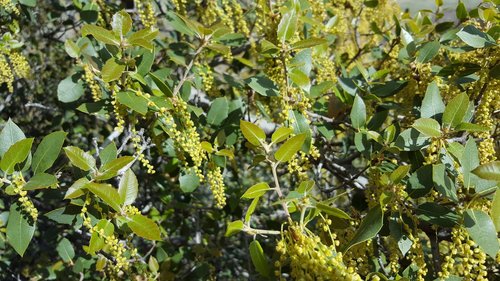
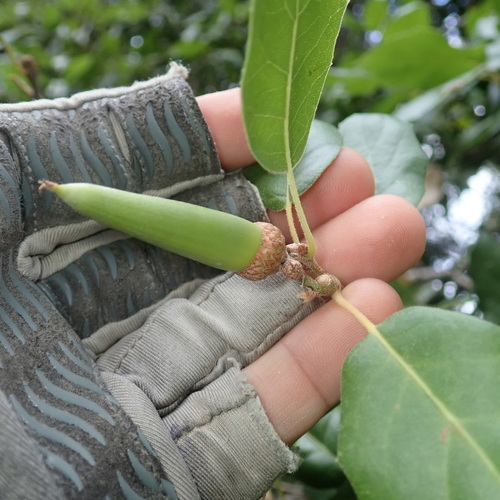
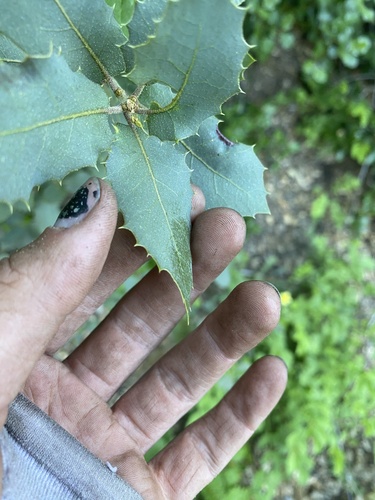
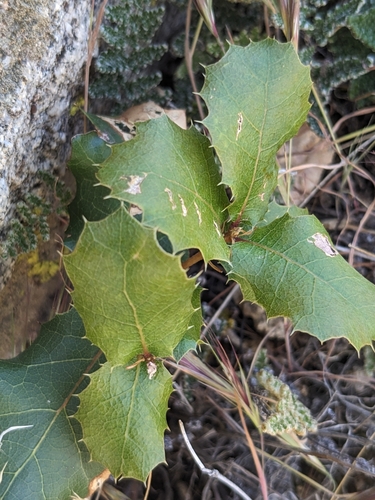
Interior Live Oak
Quercus wislizeni
Care
full sun
very low
well-drained; tolerates poor rocky soils
20–50ft tall , 20–40ft wide
Evergreen
Resistant
Acorns leached and ground into flour for traditional food
Supports up to 275 butterfly and moth species in Mediterranean California
California foothills and interior valleys
Catkins in spring
More heat tolerant than coast live oak; good inland alternative
Care Guide
Planting
Plant your Interior Live Oak in full sun in well-drained soil - it tolerates poor rocky soils and a variety of soil types, so you have flexibility here. The best time to plant is in fall or winter when the tree can establish roots before summer heat. Space it with mature size in mind (20–50 feet tall), and note that it grows slowly, so patience is part of the deal.
After Planting
Water weekly through your first summer, then cut back to once a month during summer once established - after that, this tree needs very little water and actually prefers dry conditions. The biggest mistake Bay Area gardeners make is overwatering; Interior Live Oak is built for drought and will struggle in wet soil. Prune only to shape when young; this is an easy-care tree that won't demand much of you once it's settled in.
Endangered & Threatened Species Supported
Listed under California ESA
California Species of Special Concern
Wildlife Supported
Birds

Year-round acorn storage and consumption from granary trees

Acorn consumption during migration staging and wintering
Mammals

Critical pre-hibernation mast consumption Sep-Nov

Acorn caching and consumption, primary fall food source
Insects

Host plant for Sudden Oak Death pathogen; Tanoak primary, but Q. wislizeni susceptible
Caterpillar host plant for larval development

Winter aggregation sites in bark crevices and canopy

Oak specialist caterpillar host plant

Defoliation by larvae Apr-Jun during population outbreaks

Specialized leafmining larvae within oak foliage

Larval host plant for caterpillar development

Parasitic plant providing food for mistletoe specialist birds