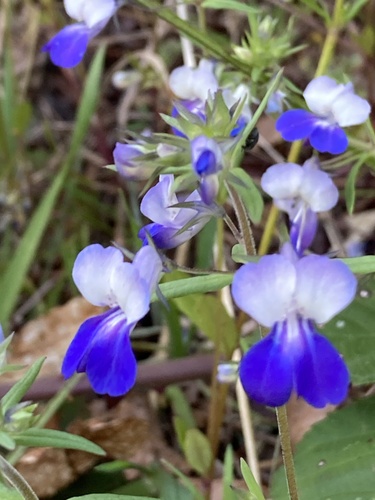
Giant Blue-Eyed Mary
Collinsia grandiflora
Care
0–1ft tall
Friendly
Prized
Coastal scrub and grasslands from Sonoma County to Kern County, below 2000 ft elevation in shaded oak woodlands.
Care Guide
Planting
Plant Giant Blue-Eyed Mary in fall or early spring to take advantage of California's rainy season. This native wildflower grows in woodland understory in its natural habitat, suggesting it may tolerate partial shade, though specific sun requirements aren't documented. Space plants about 6-12 inches apart given their modest mature height of 8-14 inches, and ensure the soil drains well since these are woodland plants accustomed to forest conditions.
After Planting
Water regularly during establishment and through the growing season, tapering off as the plant matures and rainy season arrives. Since this is an annual herb, expect it to complete its life cycle within one year - germinating, flowering with those showy purple and white blooms, setting seed, and then declining naturally. The biggest mistake is overwatering during winter rains or in poorly draining soil, which can rot the fine root system of this delicate wildflower.
Visit Calscape for more information about Giant Blue-Eyed Mary
Wildlife Supported
Insects

Early season nectar source for emerging populations

Primary forage during spring emergence and nesting period

Early season queen foraging and worker colony provisioning

Spring forage during colony development

Fungal pathogen; impacts plant vigor and seed set

Early spring colony foraging during brood build-up

Early season pollen and nectar source

Early season ground-nesting bee forage
+3 more species