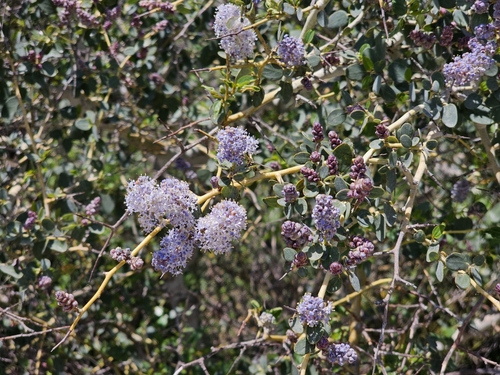
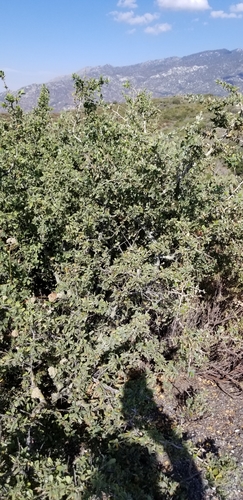
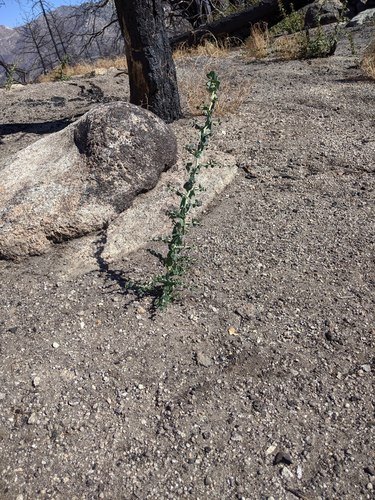
White bark California lilac
Ceanothus leucodermis
Care
full sun, part shade
very low
Fast; Dry, rocky.
6–13ft tall , 3–7ft wide
Jan-Dec
Deciduous
Resistant
Prized
Supports up to 120 butterfly and moth species in Mediterranean California
High desert chaparral in the Mojave Desert region of San Bernardino and Inyo Counties, 4000-6000 ft elevation.
Care Guide
Planting
Plant White bark California lilac in full sun on a slope or among other shrubs - this protects the roots from direct sun and mimics its native mountain and interior valley habitat. It needs fast-draining, dry, rocky soil; if your Bay Area soil is heavy clay, amend generously with gravel and sand or plant on a raised slope. Space according to its mature size of 6–13 feet tall. Plant in fall or winter to establish before summer heat.
After Planting
Water weekly for the first summer, then transition to once monthly or less once established - this is a very low water plant and overwatering is the #1 killer. After the first year, water only during extended dry periods; established plants need virtually no summer irrigation. Expect minimal pruning needs, and watch for the small thorns along stems when working around the plant. In the Bay Area's mild winters, this plant may not fully dormant; it's evergreen and will tolerate cold down to 0–5°F.
Visit Calscape for more information about White bark California lilac
Wildlife Supported
Birds

Year-round California resident; important winter and early spring nectar source

Early spring breeder in California deserts and chaparral; critical early-season nectar source
Insects

Spring forager in California chaparral; supports colony growth post-overwintering

Larval host plant; caterpillars feed on ceanothus leaves spring through early summer

Larval host plant in chaparral habitats; multiple generations spring-summer

Larval host; single spring generation on ceanothus species

Early spring forager; critical early-season pollen and nectar for colony establishment

Spring larval host in chaparral; early season specialist

Host plant specialist; populations peak in spring on new growth

Predator of aphids on ceanothus; important for natural pest management
+3 more species