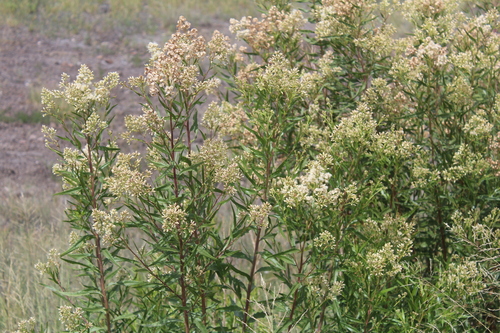
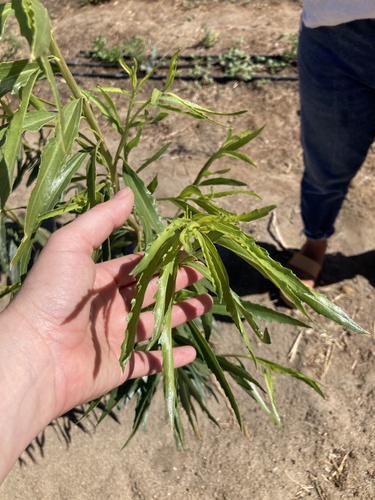
Mulefat
Baccharis salicifolia
Care
full sun
low
Fast, Medium, Slow, Standing; Heavier riparian soils, sandy washes.
6–12ft tall , 3–9ft wide
Jan-Dec
Deciduous
Resistant
Riparian corridors throughout California except high mountains, below 5000 ft elevation along streams and washes, extending to Arizona and Mexico.
Care Guide
Planting
Plant your Mulefat in full sun or partial sun in a location with fast or medium drainage - it tolerates a wide range of soil types, from sandy washes to heavier riparian soils. Space it with room to grow, since it typically reaches 6 feet tall and 3 feet wide, though it can get much larger in ideal conditions. Plant in fall or winter when the plant is dormant to help it establish before summer heat.
After Planting
Water weekly for the first summer to help your Mulefat establish itself, then you can cut back to once weekly or less in subsequent summers once established. Once established, it's highly drought-tolerant and needs only minimal summer irrigation, but it will look bushier and fuller with regular summer watering - without it, the plant can become sparse and weedy-looking. If your Mulefat gets overgrown, cut it back hard to 3-4 inches above the base in late winter or early spring to rejuvenate it with fresh green growth. The #1 mistake is assuming a drought-tolerant plant never needs water: give it consistent moisture during that first year and it will reward you with a full, attractive shrub that flowers year-round.
Endangered & Threatened Species Supported
California Species of Special Concern; monarch populations declining
Wildlife Supported
Insects

Critical fall migration fuel source Sep-Oct during southbound migration to overwintering sites

Host plant for caterpillars; multiple generations per season
Larvae develop on host plant throughout growing season

Multiple generations utilize for nectar during migration periods and breeding

Adults feed on nectar during active flight periods

Adults feed on nectar; plant provides carbohydrate fuel for colony

Adult butterflies feed on nectar during breeding season