← Back to results

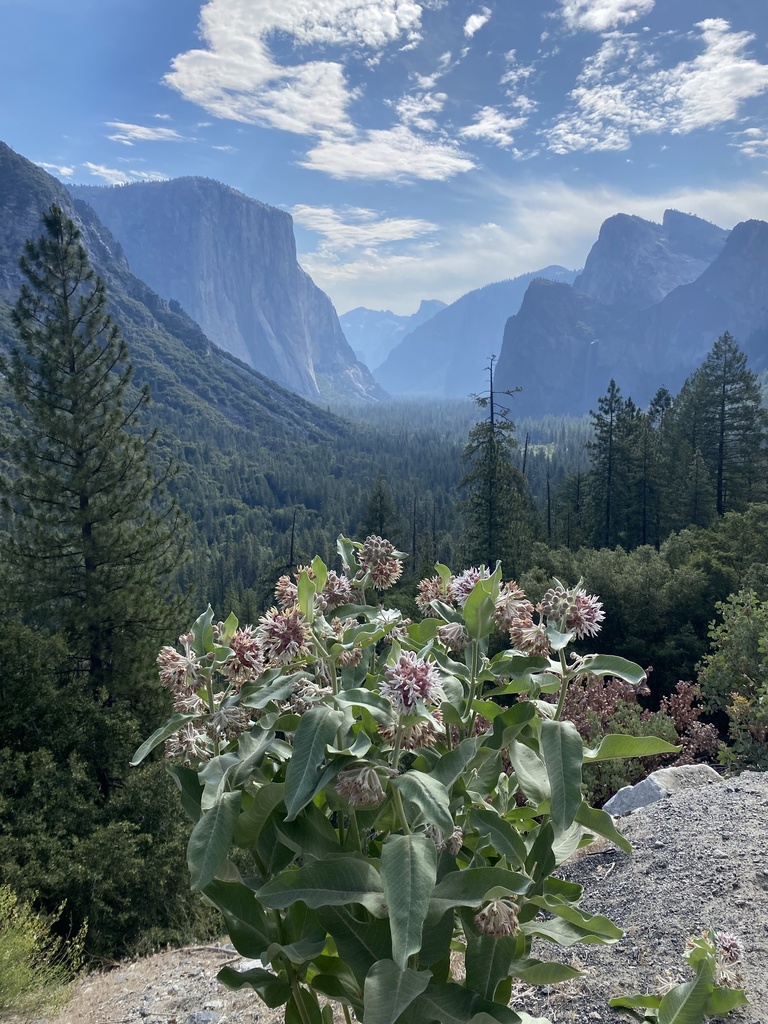
Showy milkweed

Asclepias speciosa

perennial herb View on Calscape

Care

Sun

full sun

Water

very low

Soil

Fast, Medium; Tolerates clay soil but performs best with good drainage.

Size

4–6ft tall , 4–4ft wide

Bloom

Jun-Aug

Foliage

Deciduous

Deer

Resistant

Flowers

Prized

Native Range

Riparian areas and grasslands throughout northern and central California below 6000 ft elevation, extending to British Columbia and east to the Midwest.

Care Guide

Planting

Plant your showy milkweed in full sun in a location with fast or medium drainage - it tolerates clay soil but performs best when well-drained. Space plants to accommodate their mature size of 4–6 feet tall and their spreading habit via underground rhizomes. The Bay Area's mild winters mean you can plant in fall or early spring; avoid planting during summer heat stress.

After Planting

Water weekly during your first summer to establish the plant, then cut back to no more than twice monthly once established - this is a very low water plant that thrives on neglect. In winter, when the plant goes dormant and dies back, you can prune large clumps during this dormancy season. The #1 mistake is overwatering: showy milkweed wants dry conditions, so let the soil dry out between waterings. If seed pods appear and you want to prevent self-sowing, remove them; otherwise, let them stay for the wildlife value.

Visit Calscape for more information about Showy milkweed

Endangered & Threatened Species Supported

Monarch butterfly Danaus plexippus
CA Special Concern

California Species of Special Concern; monarch populations declining

Wildlife Supported

Insects

Larval Host · Year-Round

Essential larval food plant for multiple generations; critical during spring northward migration (Feb-Apr) and fall southward migration (Aug-Oct)

Nectar · Year-Round

Visits flowers for nectar during adult foraging; multiple generations utilize milkweed as fuel source

Nectar · Year-Round

Adult nectar source supporting multiple broods; important for maintaining populations in California habitats

Seeds · Year-Round

Nymphs and adults extract seeds and developing pods; population density increases through fall

Birds

Nectar · Year-Round

Year-round nectar source; especially important during winter months when few other plants bloom in California

Nectar · Year-Round

Spring/early summer migration staging and breeding season nectar source in foothill habitats

Nectar · Year-Round

Vagrant eastern species; occasional migrant utilizing milkweed nectar during spring and fall passage

Where to Buy

East Bay Wilds

2110 Eighth St, Suite 202, Berkeley

Fri 9:30am-4pm (occasional Sat, call ahead)

1.5 mi (510) 409-5858 Website
Native Here Nursery

101 Golf Course Dr, Tilden Regional Park, Berkeley

Sat 10am-2pm

3.0 mi (510) 549-0211 Website
Watershed Nursery

601A Canal Blvd, Richmond

Tue-Sun 10am-4pm

5.0 mi (510) 234-2222 Website
Yerba Buena Nursery

12511 San Mateo Rd, Half Moon Bay

Tue-Sat 9am-4pm

12.0 mi (650) 851-1668 Website