Checker Lily
Fritillaria affinis
Care
part shade
very low
well-drained; tolerates clay; summer dry
1–3ft tall , 0–0ft wide
Mar-May · brown, purple, green
Deciduous
Resistant
Friendly
Prized
Bulblets and bulbs roasted; traditional Indigenous food use
Pacific Coast from British Columbia to Southern California
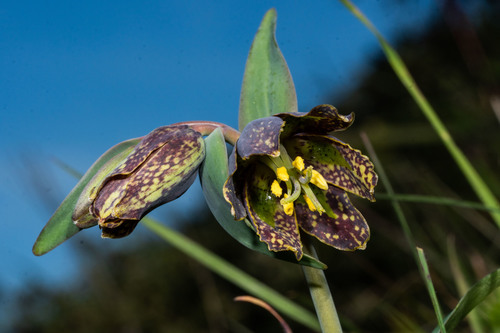
Nodding bell-shaped flowers with checkered brown-purple-green pattern
Extraordinary checkered pattern; rice-like bulblets; unique woodland bulb
Care Guide
Planting
Plant your checker lily bulb (which looks like a small mass of rice grains) in fall in a spot with part shade and very well-drained soil - this is non-negotiable, as poor drainage is the main reason these plants fail. Space bulbs about 6 inches apart. The soil can tolerate clay as long as it drains fast; if your garden stays wet in summer, grow it in a container instead where you control the drainage completely. Checker lilies are native to the Bay Area, so your local conditions should suit them fine.
After Planting
Water your newly planted bulb through its first spring and early summer to establish it, then back off dramatically - once established, it needs water only once a month or less in summer. The key is creating or maintaining dry summer dormancy; after the flowers fade in late spring, stop watering and let the plant go dormant. The #1 mistake people make is watering too much during summer when the plant is naturally resting, which rots the bulb. Expect flowers in March through May of your first year, then the plant will disappear underground - this is normal and means it's thriving.
Wildlife Supported
Insects

Queen foraging and colony provisioning Mar-May during bloom

Early spring colony establishment and queen nutrition
Primary fly pollinator attracted to faint musky scent Mar-May

Early spring forager, active during Checker Lily bloom Mar-May
Primary spring pollen and nectar source during bloom period

Spring colony nutrition during Checker Lily bloom

Early spring carbohydrate forage for foundress queens
Secondary pollinator attracted to musky scent during bloom
+2 more species