Pipevine
Aristolochia californica
Care
part shade
moderate
moist, well-drained; tolerates some clay
8–20ft tall , 3–8ft wide
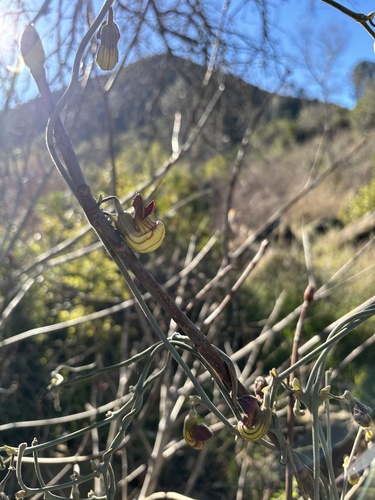
Jan-Apr · brownish-purple
Deciduous
Prized
California Coast Ranges and Sierra foothills
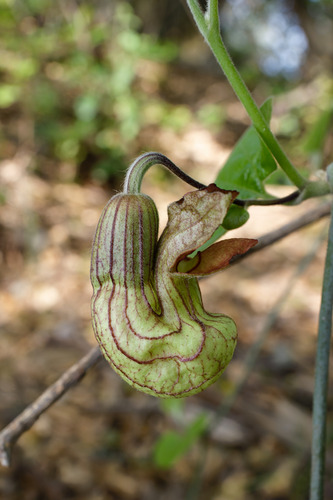
Unusual curved pipe-shaped flowers in winter/early spring before leaves
Essential plant for pipevine swallowtail butterfly conservation
Care Guide
Planting
Plant your pipevine in partial shade where it has room to sprawl - this deciduous vine will eventually reach 20 feet or more, so give it space to spread over a trellis, fence, or open ground. Choose a spot with moist, well-drained soil that tolerates clay; the plant adapts to various soil types but prefers the moist woodland conditions it naturally inhabits. Plant in fall or winter to establish before the growing season, and space accordingly for its mature size.
After Planting
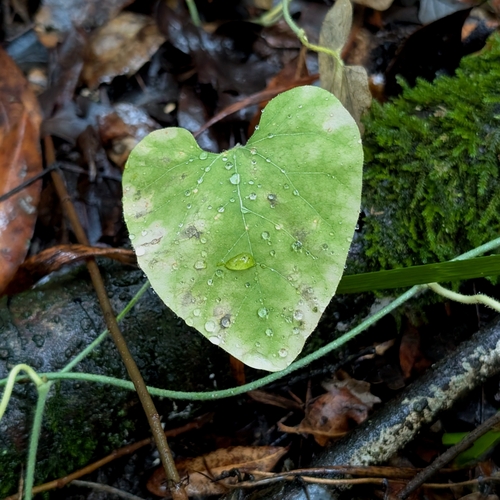
Water weekly through your first summer, then back off to once a week or less once established - this is a low to moderate water plant that doesn't need much once its rhizomes are settled in. Expect the vine to go dormant and drop its leaves in winter; this is normal. The biggest mistake is overwatering: pipevine tolerates slow drainage but resents soggy soil, so let it dry out between waterings. Prune only as needed to direct growth or manage size, as the plant flowers profusely when left largely to its own devices.
Wildlife Supported
Insects

Sole larval host plant; caterpillars feed exclusively on pipevine foliage Mar-May, critical for species reproduction and conservation

Adults feed on pipevine flowers during bloom season Jan-Apr

Adults visit early spring flowers for nectar; provides carbohydrate source during colony establishment
Adults forage on early pipevine blooms for nectar fuel
Birds

Early winter blooms (Jan-Apr) provide critical nectar source during cooler months when few plants flower; supports overwintering populations