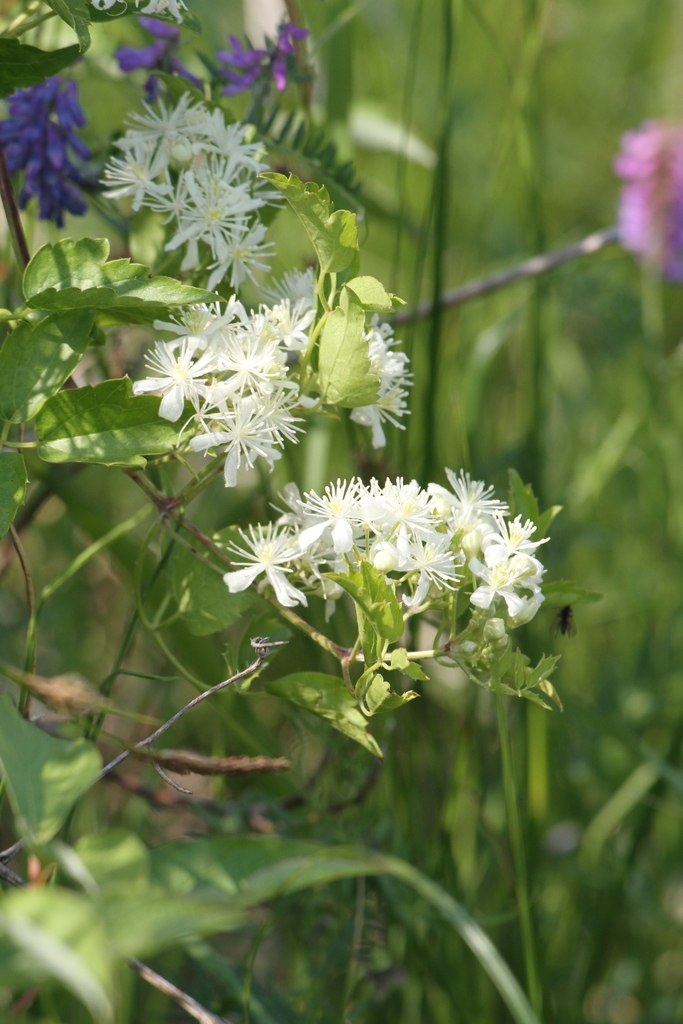
Western Virgin's Bower
Clematis ligusticifolia
Care
full sun, part shade
low
moist to dry; adaptable; tolerates clay
10–30ft tall , 5–10ft wide
May-Aug · creamy white
Deciduous
Resistant
Prized
Western North America in riparian and woodland areas
Masses of small creamy white flowers followed by feathery seed heads
Spectacular feathery seed heads in fall; vigorous grower
Care Guide
Planting
Plant Western Virgin's Bower in partial shade to deep shade (though it tolerates full sun) with fast to slow draining soil - it's adaptable to sand, clay, and even serpentine soil, so drainage isn't a major concern. Plant in fall or winter when the plant is dormant, spacing it where it has room to climb and spread since it can reach 10-30 feet. This vigorous vine is tough enough to establish in moist to dry conditions.
After Planting
Water weekly for the first growing season to help your vine establish, then taper off once it's established - by year two, it needs water only twice a month or less during summer. Don't over-water; this is a naturally low-maintenance plant that thrives on moderate to low water once settled in. The plant is deciduous and will go fully dormant in winter, which is completely normal. The #1 mistake is watering too frequently after the first year - resist the urge and let it dry out between waterings.
Visit Calscape for more information about Western Virgin's Bower
Wildlife Supported
Birds
Seeds consumed during fall migration and winter; feathery seeds highly attractive
Winter food source in montane California regions
Seed consumption during fall staging
Insects
Primary nectar source during May-Aug bloom period
Forages blooms throughout flowering season
Spring-summer forager on clematis flowers
Active forager during peak bloom May-Aug
Mid-summer bloom visitor
Butterfly visitor during bloom season
Adult energy source during hunting season
Summer resident forager
+3 more species
Arachnids
Occasional nectar visitor, primarily predator of flower insects