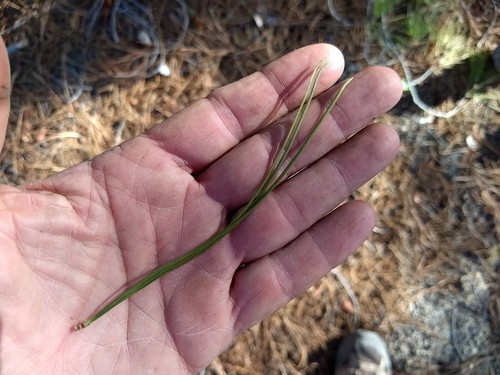
Monterey Pine
Pinus radiata
Care
full sun, part shade
moderate
Fast; Prefers sand or sandstone.
49–197ft tall , 15–30ft wide
Jan-Dec
Evergreen
Supports up to 220 butterfly and moth species in Mediterranean California
Coastal central California from Piedras Blancas in San Luis Obispo County to Año Nuevo in Santa Cruz County, below 1500 ft elevation.
Care Guide
Planting
Plant your Monterey Pine in full sun along the coast, staying well within the coastal fog bank - this is critical, as inland trees typically die after about five years even with supplemental water. Choose a location with fast-draining soil, ideally sand or sandstone, since this tree evolved on coastal soils. Plant in fall or winter to establish before summer heat. Space according to your mature tree goals, keeping in mind this can reach 50–200 feet depending on conditions.
After Planting
Water moderately and consistently during your tree's first growing season to establish a deep root system, then taper to a maximum of twice monthly during summer once established. Monterey Pine needs minimal pruning - just remove dead or damaged branches as needed. Your biggest mistake will be planting inland or outside the coastal fog zone; no amount of watering will save a tree in those conditions. Once established in the right location, this is a low-maintenance native that handles coastal conditions, cold down to 10–20°F, and poor soils with ease.
Wildlife Supported
Birds

Forages for insects in pine foliage; winter resident in California

Nests and forages in understory; year-round resident

Consumes pine seeds opportunistically

Specialist seed feeder on Monterey Pine where range overlaps
Insects

Larvae bore into terminal shoots in spring; significant pest

Larvae develop in wood; adults feed on bark and needles

Multiple generations; larvae infest new growth March-October

Larvae tunnel in wood; females oviposit July-September

Wood-boring larvae; attracted to stressed/damaged trees

Nymphs feed on sap in foam; spring-early summer
Scale insect; overwinters on twigs and branches

Larvae defoliate foliage in gregarious groups
+1 more species