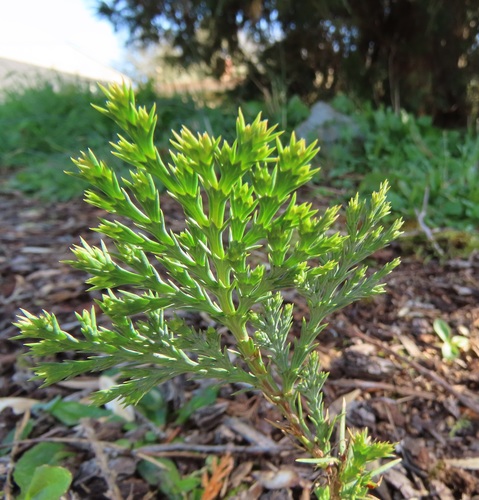
Incense Cedar
Calocedrus decurrens
Care
full sun, part shade
moderate
Medium; Prefers deep woodland soil with high organic content. Tolerates serpentine soil..
12–197ft tall , 50–50ft wide
Mar-May
Evergreen
Resistant
Sierra Nevada and Cascade ranges from Lassen County south to Kern County, 3000-8000 ft elevation, in conifer forest.
Care Guide
Planting
Plant your Incense Cedar in full sun in a location with plenty of room - this tree grows large and needs space to spread. Choose a spot with medium-draining soil rich in organic matter; it prefers deep woodland soil but will tolerate serpentine soil. Plant in fall or winter when the tree is dormant to give it time to establish roots before summer heat. Space it where it has room to develop its broad conical crown without crowding nearby plants.
After Planting
Water deeply but infrequently when young to build drought tolerance; once established, cut back to watering no more than twice a month during summer. The biggest mistake Bay Area gardeners make is overwatering - Incense Cedar is native to our region and doesn't need coddling once its roots are deep. Expect slow, steady growth in year one as the tree focuses on root development rather than top growth. Prune only to remove dead or damaged branches; this tree naturally develops a handsome shape and doesn't need shaping.
Endangered & Threatened Species Supported
California Species of Special Concern
Wildlife Supported
Birds

Large cavities in incense cedar provide nesting and roosting sites

Forages on foliage and bark for arthropods; year-round resident in coniferous forests

Uses dense foliage for nesting and cover in mixed conifer forests
Insects

Hypogeous fungus forms mycorrhizal relationships; fruiting bodies dispersed by forest mammals

Wood-boring beetle larvae tunnel in incense cedar wood and bark

Larval wood borer in incense cedar; targets stressed or newly felled trees

Larvae defoliate coniferous foliage in spring; can cause significant browsing damage
Parasitic mistletoe species specific to incense cedar; supports specialized arthropod communities

Armored scale insect feeding on incense cedar and related conifers

Larvae are polyphagous defoliators on various conifers including incense cedar

Butterfly larvae feed on conifer foliage; spring emergence timed with new growth