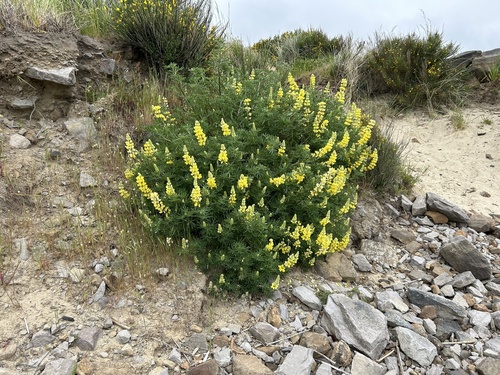
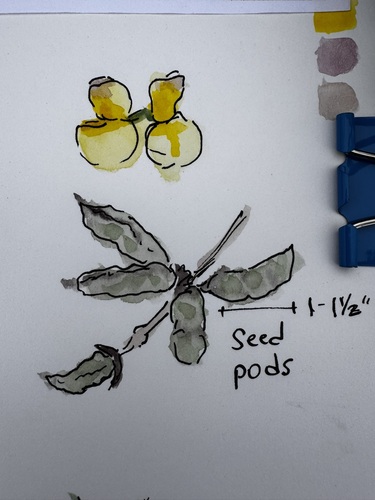
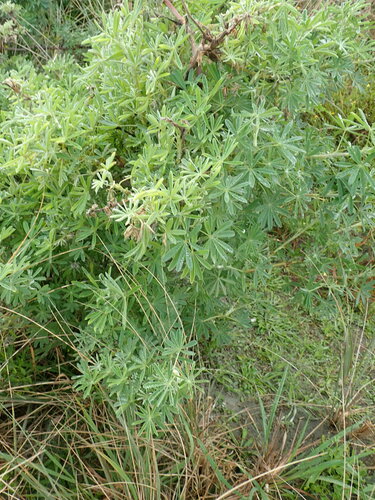
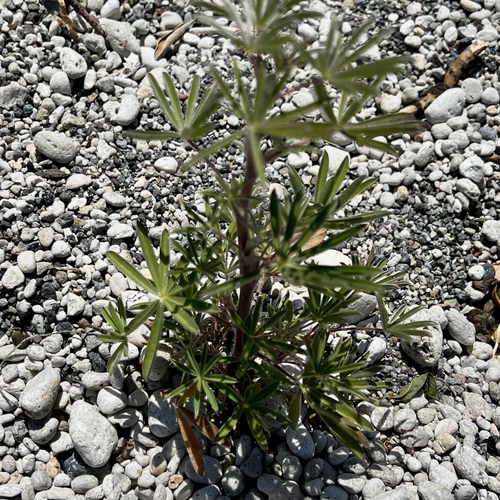
Blue Bush Lupine
Lupinus propinquus
Care
low
Fast; Adaptable but prefers sandy, well drained soil.
Resistant
Friendly
Yes
Prized
Supports up to 74 butterfly and moth species in Mediterranean California
Sierra Nevada foothills from Placer to Tulare County, 2000-5000 ft elevation, in chaparral and mixed woodland.
Care Guide
Planting
Plant your Blue Bush Lupine in fast-draining soil - sandy soil is ideal, though the plant is adaptable to other well-draining conditions. Space it where it will get good air circulation, as this native shrub prefers the drier conditions of central California coastal areas. Plant in fall or winter when the plant can establish roots before the dry season.
After Planting
Water regularly during your plant's first growing season to help it establish, then transition to low water once established - this is a drought-tolerant native that actually prefers dry conditions. The #1 mistake is overwatering: soggy soil will kill this plant faster than anything else. Expect moderate care requirements overall, and enjoy watching butterflies and moths visit throughout the growing season.
Endangered & Threatened Species Supported
Zerene Fritillary; multiple subspecies of concern including S. z. hippolyta (ESA listed 1992)
California Endangered Species Act listed
Wildlife Supported
Insects

specialist caterpillar host plant for spring brood development

larval foodplant for multiple native butterfly and moth species

important early spring forage for managed and feral colonies

primary early-season nectar source for queen establishment and colony founding

caterpillars feed on lupine foliage in late spring prior to pupation

larvae develop in stressed or dead lupine stems spring through early summer

caterpillars develop on lupine leaves during spring months
Birds

gleaning seeds from dried lupine pods in late fall and winter

dense lupine patches provide year-round cover and nesting habitat in chaparral