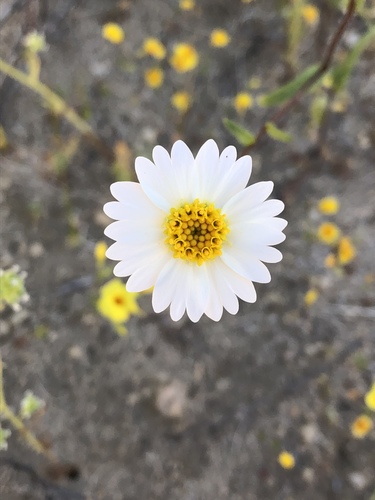
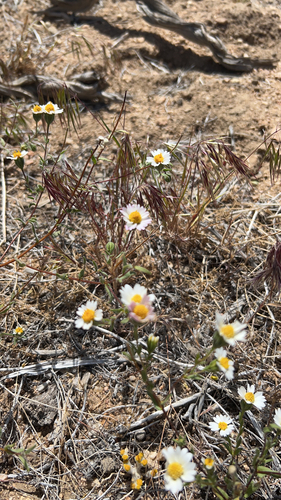
Glandular Layia
Layia glandulosa
Care
full sun
low
Fast; Prefers gravelly or sandy soils; adaptable.
1–2ft tall
Mar-May
Friendly
Prized
Interior valleys and foothills of the Central Valley and Sierra Nevada foothills, below 3000 ft elevation, in grassland and scrub habitats.
Care Guide
Planting
Plant Glandular Layia in full sun with fast-draining, gravelly or sandy soil - it's adaptable, so don't stress about perfect conditions, but poor drainage will kill it faster than anything else. Spring is your window to get it in the ground before the growing season ramps up. Space plants about 1 foot apart since they'll reach 1–2 feet tall, and this annual doesn't need companions to thrive, though it'll fit naturally into a water-wise garden.
After Planting
Water weekly for the first few months after planting to establish the roots, then back off significantly since this plant thrives on low water once established. Expect blooms from March through May, then the plant will naturally decline as an annual - let it finish its cycle and reseed if you want it back next year. The biggest mistake Bay Area gardeners make is overwatering; treat it like a plant that came from dry, sandy regions (because it did), and you'll have a cheerful spring bloomer with minimal fuss.
Endangered & Threatened Species Supported
California endemic, limited range
California state threatened species
California Species of Special Concern
Wildlife Supported
Insects

Critical larval host plant for spring-emerging butterflies

Larval food plant supporting population in coastal California

Spring foraging resource for native bee populations

Larval food plant for caterpillars in spring emergence period

Early season nectar and pollen source for native bees

Multi-generational host plant for spring through summer broods

Adult feeding on pollen during spring activity period

Adult pollen feeder during spring blooming period
+5 more species