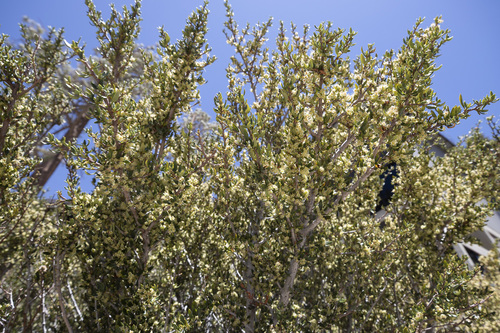
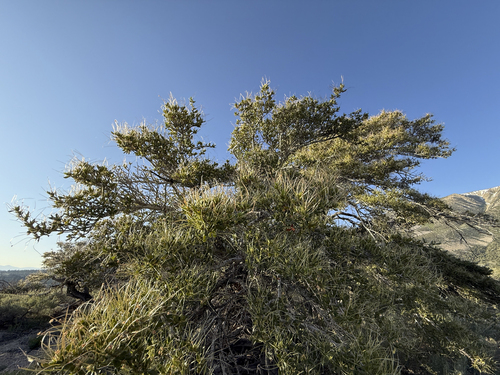
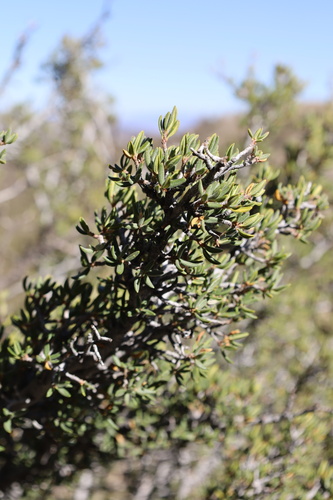
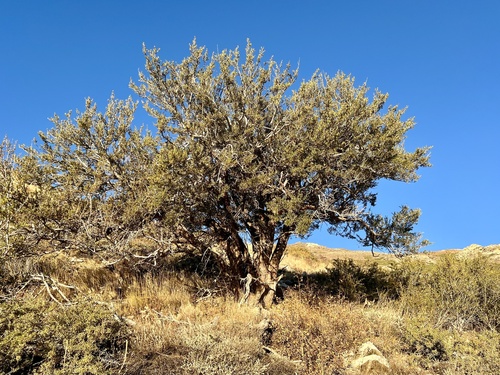
Curl-Leaf Mountain Mahogany
Cercocarpus ledifolius
Care
full sun, part shade
very low
Fast, Medium; Often rocky soils.
7–33ft tall , 5–10ft wide
Jan-Dec
Evergreen
Resistant
High elevation mountains of the Sierra Nevada and Inyo County, typically 6000-10000 ft elevation on dry slopes.
Care Guide
Planting
Plant your Curl Leaf Mountain Mahogany in full sun with fast-draining or medium-draining soil - rocky soil is ideal and mimics its native high desert habitat. Drainage is non-negotiable; if your Bay Area soil tends toward clay, amend heavily with coarse sand and rocks before planting. The best time to plant is fall or early winter when the plant can establish roots during the cooler months.
After Planting
Water weekly for the first summer to help establish roots, then taper off as fall approaches. Once established (by year two), this plant needs virtually no supplemental water - aim for maximum once per month in summer, and skip it entirely during the rainy season. The #1 mistake Bay Area gardeners make is overwatering out of habit; this plant evolved on desert slopes and will rot if kept moist. Pruning is minimal; just remove any dead wood and shape as needed in spring after flowering.
Visit Calscape for more information about Curl-Leaf Mountain Mahogany
Wildlife Supported
Birds

Year-round resident in California; relies on mahogany for early spring nectar before other plants bloom
Insects

Larvae feed on new foliage April-June; form characteristic silk tents on branches
Fungal disease specialist on Cercocarpus; provides microbial habitat

Larvae feed on foliage and flowers; host-specific to Cercocarpus species

Polyphagous but documented on mahogany; larvae feed within rolled leaves

Specialized gall-forming midge; larvae develop in leaf galls spring-early summer

Polyphagous lepidopteran; larvae feed on scrub vegetation including mahogany