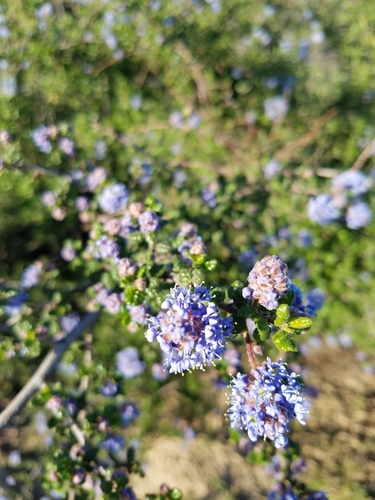
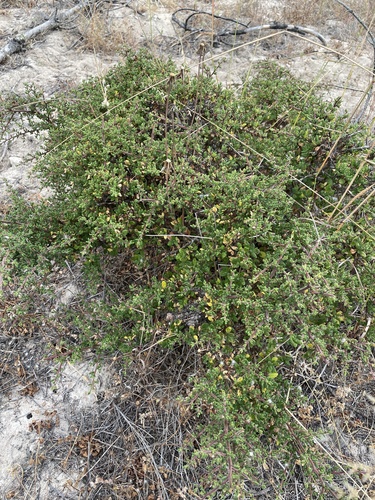
Nipomo Mesa Ceanothus
Ceanothus impressus var. nipomensis
Care
full sun
very low
Fast, Medium; Sandstone or sandy soil.
4–6ft tall , 4–6ft wide
Jan-Dec
Evergreen
Resistant
Friendly
Yes
Prized
Supports up to 120 butterfly and moth species in Mediterranean California
Endemic to Nipomo Mesa in San Luis Obispo County, below 1000 ft in coastal sage scrub and chaparral.
Care Guide
Planting
Plant your Nipomo Mesa Ceanothus in full sun with fast-draining, sandy soil - this is non-negotiable for success in the Bay Area. Space it 4–6 feet apart if you're creating a hedge. Fall or early winter is ideal for planting so the plant can establish before summer heat arrives. This native thrives in our coastal climate, but won't survive hot inland valleys, so verify your location has marine influence before committing.
After Planting
Water twice monthly once established, then stop - this plant dies from overwatering, not drought. Year one is critical: keep soil moist (not wet) through the first summer to help roots develop, then dramatically reduce water by fall. Prune lightly after flowering ends in spring if you want to shape it as a hedge; otherwise let it grow naturally. The biggest mistake Bay Area gardeners make is giving it too much summer water out of habit - resist that urge entirely.
Visit Calscape for more information about Nipomo Mesa Ceanothus
Endangered & Threatened Species Supported
Listed under ESA and CESA
Wildlife Supported
Birds

Nesting and cover in coastal sage scrub habitat

Early spring nectar source during breeding season courtship displays
Dense shrub provides nesting and shelter habitat on coastal mesa
Insects

Caterpillars feed on new spring foliage

Larvae develop in plant galls during spring growth period
Parasitoid of ceanothus gall midge; indirect plant benefit through pest suppression

Spring flowering provides early-season protein for colony establishment
Reptiles

Dense evergreen foliage provides thermal refuge and insect foraging substrate
Mammals

Evergreen foliage provides winter browse when other vegetation scarce