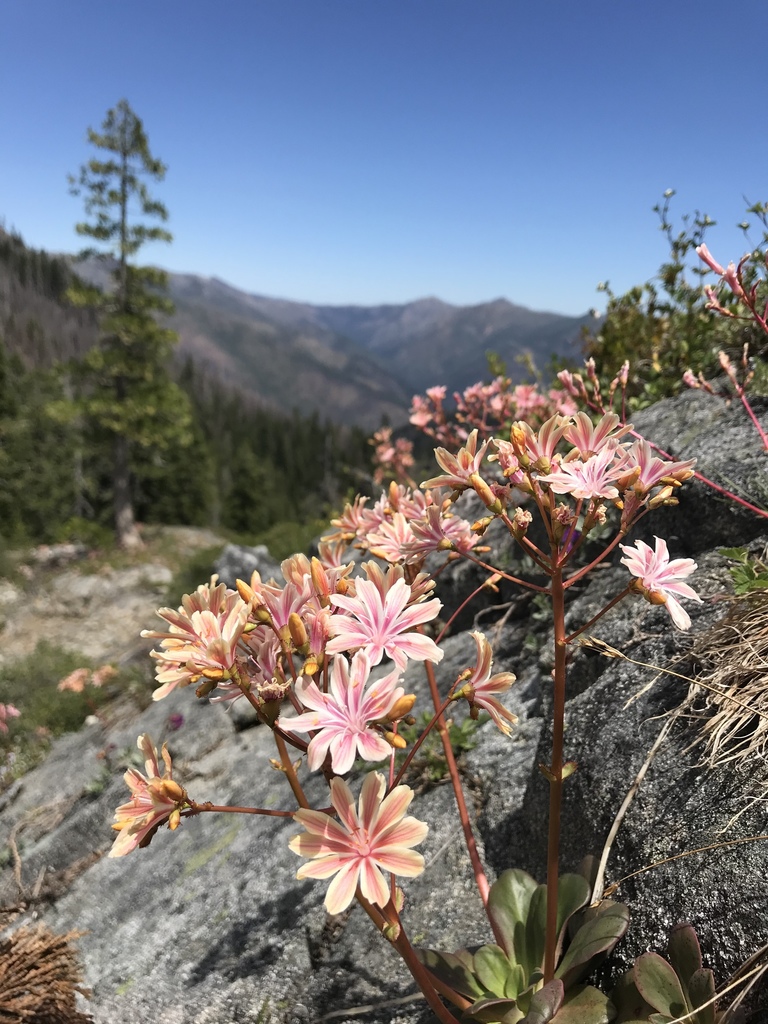
Cliff Maids
Lewisia cotyledon
Care
full sun, part shade
low
Fast; Well drained.
0–1ft tall , 1–1ft wide
Mar-Aug
Deciduous
Resistant
Friendly
Prized
Leaves and corms eaten raw or cooked; traditional Indigenous food.
Northern California mountain ranges from the Klamath region to the Sierra Nevada, typically 4000-7000 ft elevation on rocky slopes and cliffs.
Care Guide
Planting
Plant cliff maids in full sun in fast-draining, well-drained soil - think rock garden conditions or containers with gritty mix. This Bay Area native thrives in the conditions it evolved for, so don't amend heavy clay soil; instead, build a raised bed or container where you can control drainage. Space plants about 1 foot apart since they form low rosettes and spread slowly. Plant in spring or early summer to give the plant time to establish before winter.
After Planting
Water weekly during the first summer to help establish the deep taproot, then back off dramatically - once established, cliff maids need watering no more than once a month in summer, if at all. The #1 mistake is overwatering or planting in poor drainage; this plant is a desert-adapted alpine, not a cottage garden flower, and soggy soil will rot it out. Expect evergreen rosettes with tall flower stems in spring and early summer, then the flowers fade; minimal pruning is needed beyond deadheading spent blooms if desired. This cold-hardy perennial settles in for the long haul once it gets past year one.
Wildlife Supported
Birds
Spring migration and nesting season fuel source
Early spring breeding season resource in rocky foothills and gardens
Insects
Fungal infection of living plant tissues
Root and vascular system colonization
Early spring foraging when cliff maids bloom in rocky habitats
Spring and early summer colony provisioning