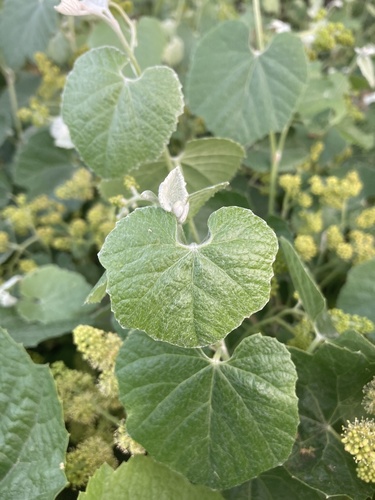
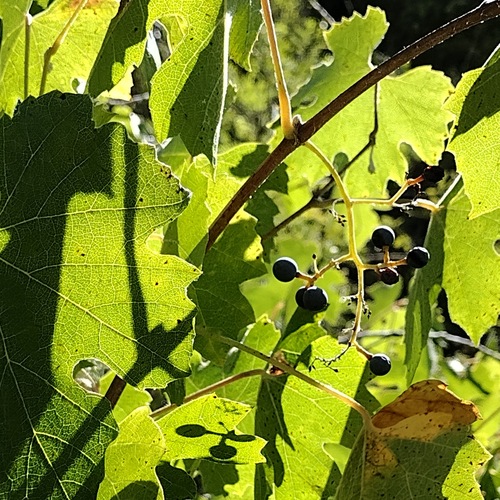
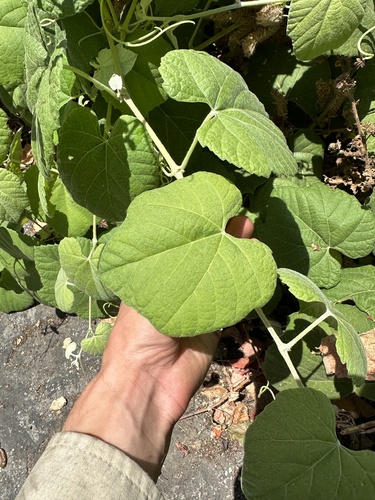
Desert Grape
Vitis girdiana
Care
full sun, part shade
low
Medium; Tolerates a variety of soils.
10–50ft tall
Mar-May
Deciduous
Grapes eaten fresh or fermented; small desert fruit
Supports up to 62 butterfly and moth species in Mediterranean California
Southern California deserts and interior valleys from Ventura County to San Diego County, 500-3000 ft elevation in desert scrub and washes.
Care Guide
Planting
Plant Desert Grape in full sun with medium-draining soil - it tolerates a variety of soil types, so don't stress about perfection. Space it near a trellis, fence, or wall that it can climb, or use it as a groundcover if you prefer. Fall through early spring is ideal for planting in the Bay Area. This southern California native is cold-hardy to 0°F, so it'll thrive in our winters.
After Planting
Water weekly for the first summer, then cut back to once a month or less once established - this is a drought-tolerant plant that doesn't need much. Expect the plant to go completely leafless for several months each year; this is normal dormancy, not a sign of trouble. Prune as needed to shape it along your support structure or control its spread. The #1 mistake is overwatering: Desert Grape evolved in arid conditions and will rot if kept too wet.
Endangered & Threatened Species Supported
California state threatened listing
Wildlife Supported
Birds

Consume grape berries during migration and winter in California desert regions; important fall staging food Sep-Nov

Native to desert scrub; feeds on berries year-round in southern California
Insects

Pathogenic fungus; overwinters on plant tissue, active during warm wet periods
Fungal disease agent on Vitis species
Parasitic nematode affecting root systems
Mammals

Cache and consume grape berries; important late summer-fall food source

Browse young growth and vines in spring; important spring forage in desert riparian areas

Browse foliage and tender growth; available year-round food source