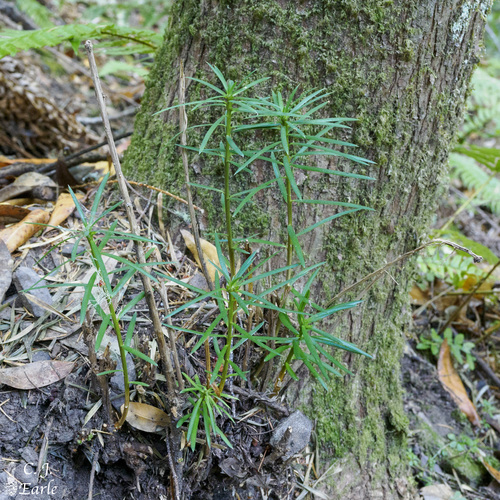
California Nutmeg
Torreya californica
Care
part shade
low
Fast; Prefers moist, fertile soil with good drainage.
49–141ft tall
Evergreen
Resistant
Nuts eaten roasted; kernel similar to nutmeg flavor
Coast Ranges and Sierra Nevada foothills from Kern County to Trinity County, typically 1000-4500 ft elevation in mixed conifer and oak forests.
Care Guide
Planting
Plant your California Nutmeg in part shade with moist, fertile soil that drains quickly - waterlogged soil will cause problems. Space it where it has room to grow into a 50–140 foot tree with a conical shape, though this is a slow, long-term investment. The fall is your best planting window in the Bay Area. Avoid full sun exposure, which this forest understory native doesn't need.
After Planting
Water weekly through your first summer, then taper off as the tree establishes - aim for moderate water needs once mature, though the soil should stay consistently moist rather than dry. Prune only to shape during the first few years; this tree naturally grows in a neat conical form and doesn't need heavy maintenance. Expect slow growth in year one, and remember that female trees won't produce their distinctive nutmeg-like fruits until 18 months after flowering, so be patient.
Endangered & Threatened Species Supported
Western gray squirrel listed as Threatened under CESA; Species of Special Concern
Wildlife Supported
Mammals

Consumes and caches nutmeg seeds as food source; critical seed dispersal agent

Harvests seeds for winter cache; aids in seed dispersal to microsites
Birds

Forages for arthropod prey in dense foliage; uses branches for roosting and cover

Utilizes cavities in dead branches and snags for nest sites during breeding season (March-June)

Gleans arthropod prey from bark and foliage; resident in Coast Range populations
Insects

Feeds on plant sap; pest species with multiple generations per year in California

Parasitoid wasp utilizing arthropod hosts on California Nutmeg foliage