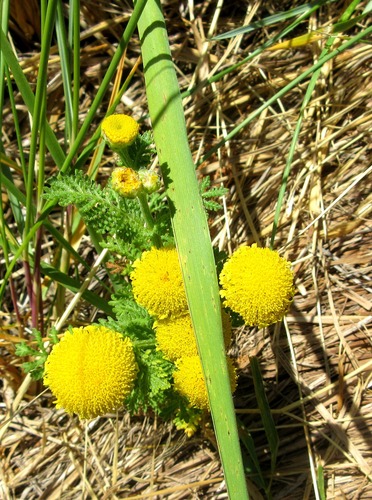
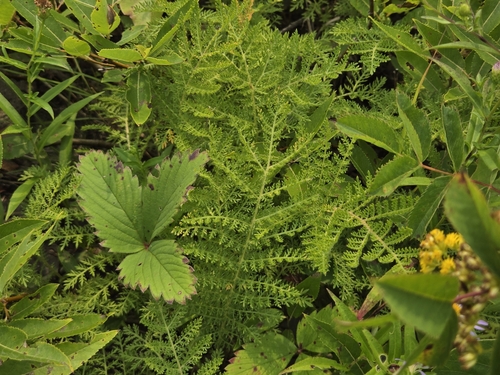
Dune Tansy
Tanacetum bipinnatum
Care
full sun
moderate
Fast; Sandy.
0–0ft tall
Jun-Nov
Evergreen
Resistant
Friendly
Coastal dunes and sandy areas of Santa Cruz and Monterey Counties below 500 ft elevation.
Care Guide
Planting
Plant Dune Tansy in full sun with fast-draining, sandy soil - this coastal native really needs good drainage to thrive. The best planting window in the Bay Area is fall or early spring. Space plants about 12 inches apart if you're using them as a groundcover or lawn alternative, and water in well after planting to settle the soil around the rhizomes.
After Planting
Water weekly for the first summer to help the plant establish, then taper off to just twice a month once established. Year one, expect moderate growth and flowers starting in June that continue into fall; the plant is evergreen, so it won't disappear in winter. The #1 mistake is overwatering - this plant evolved in coastal dunes and will rot if kept too wet, so let the soil dry between waterings and resist the urge to irrigate on a schedule during the rainy season.
Endangered & Threatened Species Supported
Endemic to California, threatened by habitat loss and climate change
Wildlife Supported
Insects

Host plant for larval development in dune habitats

Early season larval development on tansy foliage

Larval feeding on tansy leaves and stems

Larval food plant; multiple generations during warm months

Specialized leafroller larva feeds on tansy foliage

Fungal pathogen on living foliage; important in dune ecosystem dynamics

Larval development in plant stems and reproductive tissue

Larval feeding on tansy foliage and developing flowers