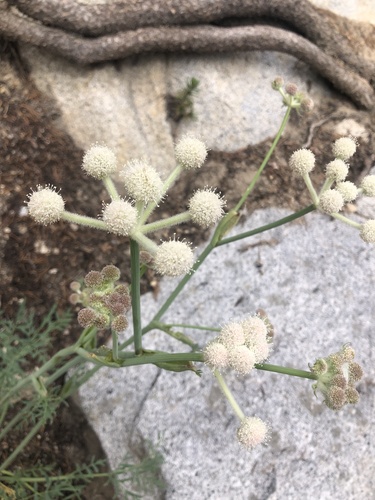
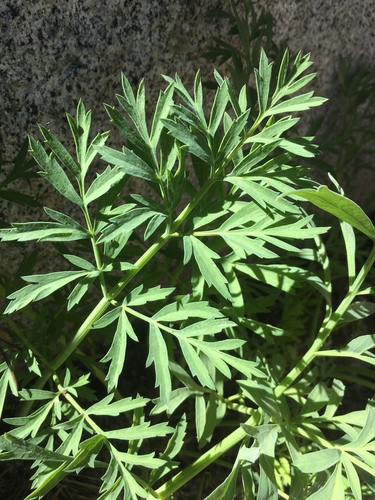
Ranger's Buttons
Angelica capitellata
Care
full sun
Resistant
Roots eaten raw or cooked; traditional Indigenous food
Coastal bluffs and headlands of northwestern California from Humboldt County to Sonoma County, below 1000 ft elevation, in coastal scrub and grassland.
Care Guide
Planting
Plant Ranger's Buttons in full sun where it can mimic its native habitat in moist creeksides and meadows. Since this plant thrives in wet conditions, choose a location with consistent moisture and good drainage to prevent root rot. Space plants according to their mature size, though exact spacing isn't specified in available data.
After Planting
Water regularly during the first growing season to establish the plant in its preferred moist habitat. Be aware that Ranger's Buttons is toxic and should be planted away from areas where children or pets might accidentally ingest it. The plant is deer resistant, making it a good choice for Bay Area gardens with wildlife pressure.
Endangered & Threatened Species Supported
Listed under California ESA
California long-horned bee, specialist on native plants
California Species of Special Concern; monarch populations declining
Wildlife Supported
Insects

Caterpillars feed on umbelliferous plants including Angelica species; multiple generations Apr-Sep

Oligolectic/specialized forager on Apiaceae family; May-Jul

Adult nectaring on diverse floral resources Jun-Aug in chaparral/oak savanna

Nectar source during spring breeding and fall migration staging; critical fuel stop Sep-Oct