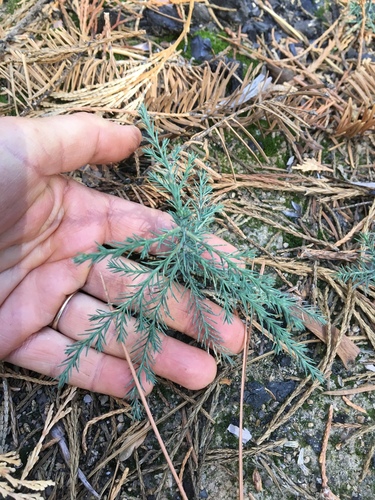
Giant Sequoia
Sequoiadendron giganteum
Care
full sun
moderate
Slow, Medium; Prefers deep, rich soil.
35–311ft tall , 50–60ft wide
Mar-May
Evergreen
Resistant
Endemic to groves on the western slope of the Sierra Nevada in Tulare, Fresno, and Inyo Counties, 5000-7000 ft elevation, in mixed conifer forests dominated by Giant Sequoia.
Care Guide
Planting
Plant your giant sequoia in full sun with deep, rich soil that drains slowly to medium - these trees thrive in well-established soil rather than sandy or fast-draining spots. Space it where it has room to grow into a large specimen, keeping in mind that solitary trees retain their lower branches, so plan accordingly for your landscape. Plant in spring or fall to give roots time to establish before extreme seasons.
After Planting
Water moderately during your first growing season to help establish a deep root system, then taper back to no more than twice monthly once established. Expect minimal pruning needs; lower branches may naturally die from shading as the tree matures, but young trees under 100 years old will retain most dead branches, so remove them only if they're hazardous. The biggest mistake is overwatering - these are mountain trees adapted to moderate water, and too much irrigation invites root problems.
Wildlife Supported
Birds

Non-native species; limited ecological relevance to California
Insects

Sap-feeding on needles during emergence and adult feeding period

Phloem-feeding insect; multi-generational on conifers

Bark and needle feeder on conifer species

Defoliator of conifers; larvae feed on needles and inner bark

Armored scale that feeds on needle sap; overwinters on host