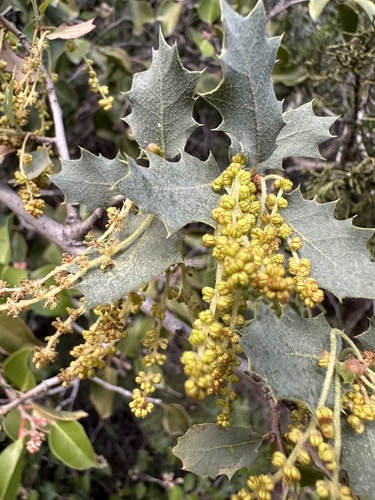
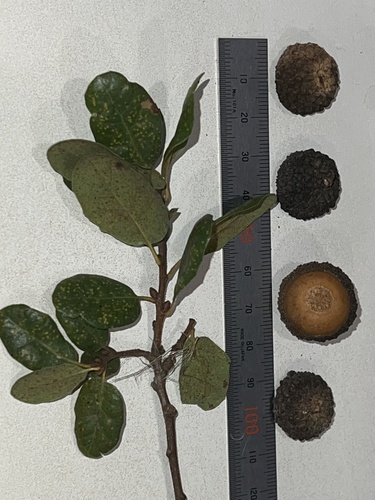
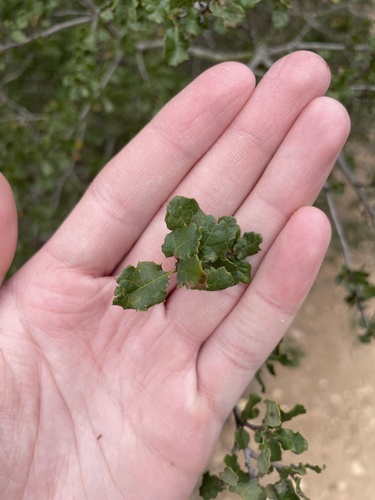
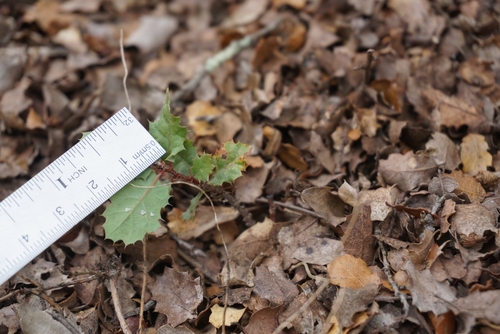
Scrub Oak
Quercus dumosa
Care
full sun
very low
Fast, Medium; Often but not always found on eroded gabbro or sandstone soils.
3–10ft tall , 8–10ft wide
Jan-Dec
Evergreen
Acorns leached and ground into flour; traditional Indigenous staple
Supports up to 275 butterfly and moth species in Mediterranean California
Endemic to coastal chaparral of Santa Barbara, Ventura, and Los Angeles Counties, below 1500 ft elevation, on dry rocky slopes and ridgetops.
Care Guide
Planting
Plant your Scrub Oak in full sun with fast-draining soil - sandy or sandstone soils are ideal, though it adapts to medium-draining soils too. Space it 3–10 feet tall at maturity, so plan accordingly if you're using it for hedging or bank stabilization. Fall or winter planting gives the plant time to establish its deep root system before the dry season. Avoid heavy clay or poorly draining sites, which will cause root problems.
After Planting
Water weekly during your first summer to help establish the plant, then transition to once monthly or less by the second year once it's settled in. After establishment, Scrub Oak is extremely drought-tolerant and needs very little supplemental water - this is the #1 mistake people make, so resist the urge to baby it with extra irrigation. The plant requires minimal pruning and will naturally develop into a dense evergreen shrub; if needed, prune after flowering (winter or spring) to shape it. Expect slow but steady growth in year one as the plant invests in that deep root system.
Endangered & Threatened Species Supported
Endemic to Southern California coastal sage scrub
Listed under California ESA
California Species of Special Concern
Wildlife Supported
Insects

Primary host plant; larvae defoliate foliage April-June

Gregarious larvae form tents; feed April-June on foliage

Caterpillars feed on oak foliage; pupate summer

Lepidoptera larvae feed on developing foliage in spring
Early spring pollen forager on oak flowers

Noctuoid larval host plant

Larvae feed on emerging oak foliage
Larvae feed on new foliage development
+3 more species