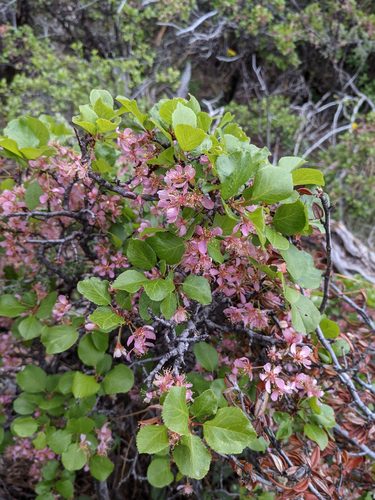
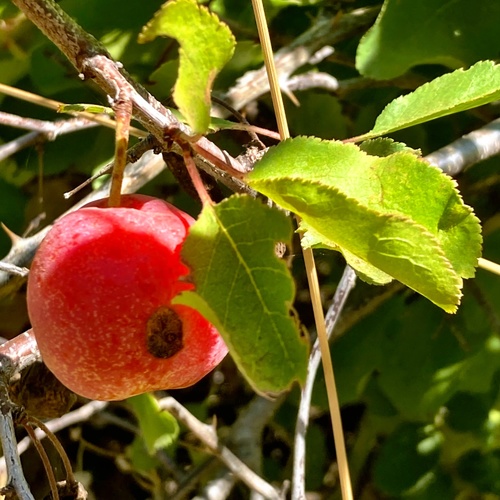
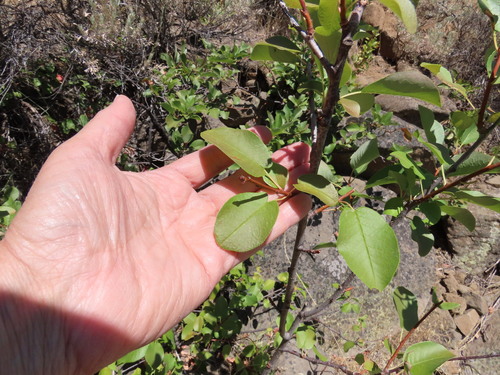
Sierra plum
Prunus subcordata
Care
part shade
moderate
Prefers sandy or loamy soils. Does not grow well in clay soils.
20–26ft tall
Mar-May
Deciduous
Yes
Prized
Fruits eaten fresh or dried; traditional Indigenous food source
Supports up to 262 butterfly and moth species in Mediterranean California
Sierra Nevada foothill woodlands and mountain valleys from Shasta to Kern Counties, 2000-5000 ft elevation, in riparian and oak woodland habitats.
Care Guide
Planting
Plant your Sierra plum in partial shade with well-draining sandy or loamy soil - avoid clay, where it won't thrive. Space it where it has room to grow into a 20–26 foot shrub or small tree, and plant in fall or early spring. This native Bay Area plant is cold-hardy and will establish best when you give it room to develop its natural form.
After Planting
Water moderately through your first summer and into fall to help it establish, then taper back as it becomes drought-tolerant. Expect delicate pink or white flowers in spring (March–May) followed by small tart plums in late summer - this is a deciduous plant, so it will drop its leaves in winter, which is normal. The #1 mistake is overwatering or planting in clay soil; stick to moderate water and sandy-loamy soil, and your plum will reward you with minimal fuss.
Wildlife Supported
Insects

larvae defoliate host plants April-June during larval development
larvae feed on new foliage during spring growth period

larvae tunnel in bark and wood; adults feed on foliage

early spring pollinator activity

fungal pathogen; infected foliage provides specialized habitat

spring pollinator during flowering period

spring-blooming bee foraging during plum flowering period

larval host; caterpillars feed on developing leaves and fruit
+1 more species