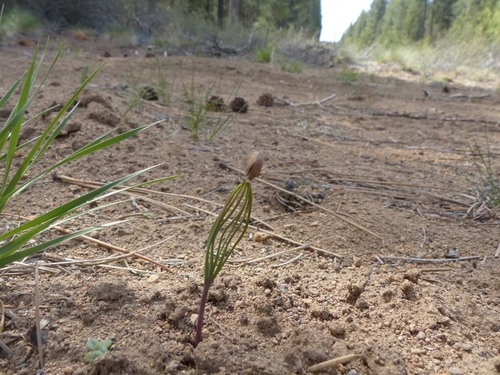
Ponderosa Pine
Pinus ponderosa
Care
part shade
very low
Fast, Medium, Slow; Prefers sandy or loamy soils. Does not grow well in clay soils.
40–223ft tall , 7–7ft wide
Mar-May
Evergreen
Resistant
Pine nuts (seeds) eaten raw or roasted; nutritious and traditional food
Supports up to 220 butterfly and moth species in Mediterranean California
Sierra Nevada, Cascade Range, and interior mountain ranges throughout California from Lassen to Kern Counties, 2000-10000 ft elevation, in mixed conifer forests.
Care Guide
Planting
Plant your Ponderosa Pine in a location with partial shade and well-draining soil - it prefers sandy or loamy soils and will struggle in clay, so amend heavy soil before planting. Ensure the planting site has fast to medium drainage; poor drainage is one of the few things that will compromise this otherwise hardy tree. Space according to the mature size you're targeting (this species ranges from 40 to 223 feet, so choose a dwarf or compact cultivar if space is limited), and plant in fall or early spring for best establishment.
After Planting
Water weekly during your Ponderosa's first summer, then taper off - once established, it needs only about one watering per month or less during summer, making it extremely drought-tolerant once rooted. Year one is critical: consistent moisture helps the roots establish, but after that, this tree thrives on neglect and is cold-hardy to -10°F, so you can largely leave it alone. The biggest mistake Bay Area gardeners make is overwatering; resist the urge to baby this plant beyond that first season, as it evolved to survive on minimal water in rocky mountain terrain.
Endangered & Threatened Species Supported
Old-growth forest dependent; population declining
California state-listed as Threatened; population declining
Wildlife Supported
Birds

Cache seeds for winter and spring survival; dispersal agent

Specialized seed extraction from closed cones; primary food source

Cached seed retrieval critical for overwinter survival

Social caching behavior; significant seed dispersal

Caching seeds; winter resident in ponderosa forest

Specialized pine seed extraction from bark crevices

Nomadic specialist feeding on pine seeds

Irruptive species; heavy seed predation during years of low natural food
+2 more species
Insects

Larvae tunnel through bark and sapwood; critical pest during outbreak years
Mammals

Browse on needles and branches during snow cover

Browsing on low branches during severe winters