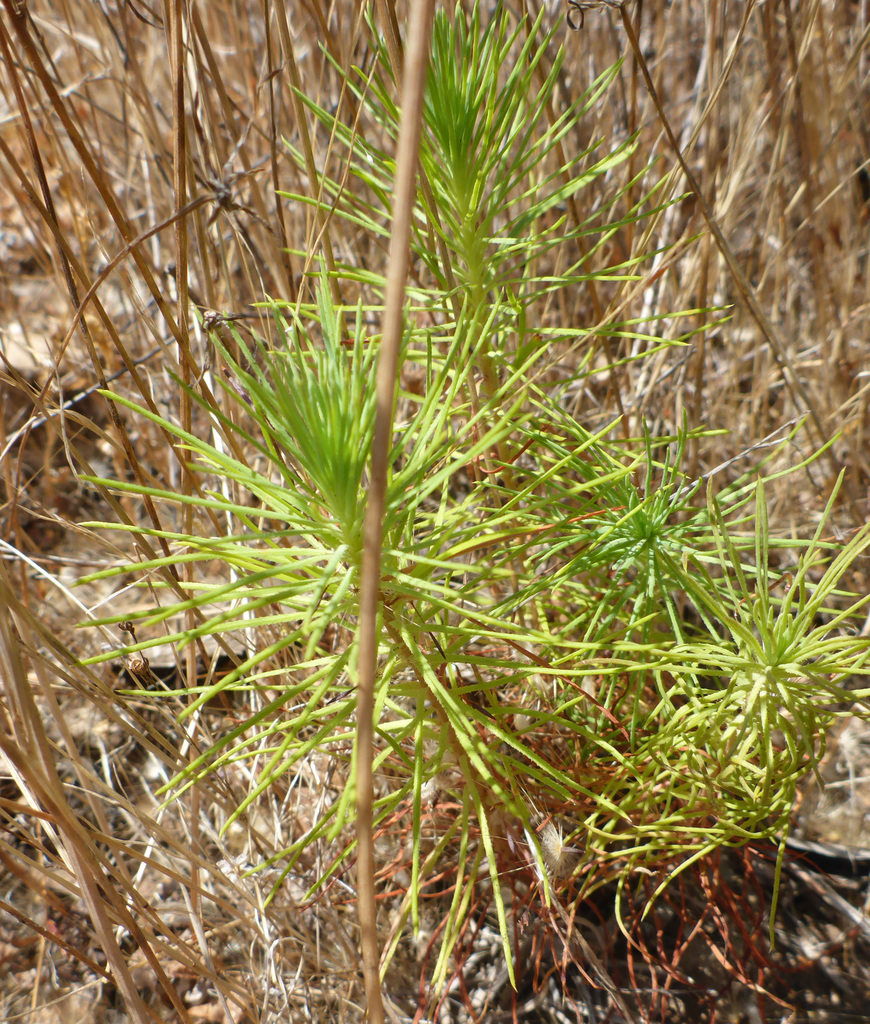
Bishop Pine
Pinus muricata
Care
full sun, part shade
low
Fast, Medium, Slow; Tolerates a variety of soils types.
35–90ft tall
Mar-May
Resistant
Pine nuts (seeds) eaten raw or roasted; nutritious and traditional food
Supports up to 220 butterfly and moth species in Mediterranean California
Coastal endemic from Humboldt County to Santa Cruz County in isolated stands, below 1000 ft elevation, on coastal bluffs and sandy terraces in maritime chaparral.
Care Guide
Planting
Plant your Bishop Pine in full sun in a location with good drainage - this tree thrives on dry, rocky soil and tolerates a wide range of soil types, so don't worry too much about perfect conditions. Since Bishop Pines are naturally coastal trees adapted to harsh conditions, they're remarkably flexible with soil drainage (fast, medium, or slow all work), but make sure water doesn't pool around the base. Plant in fall or early spring to give the tree time to establish before summer heat.
After Planting
Water moderately during the first growing season to help establish roots, then transition to low-water maintenance once established - Bishop Pines are drought-tolerant and actually prefer drier conditions, so you can stop supplemental watering after year one. Don't prune unless necessary to remove dead or crossing branches; these trees often grow naturally twisted and gnarled, especially in windy or coastal conditions, and that's part of their character. The biggest mistake people make is overwatering: this is a tree that evolved on dry, exposed coastal cliffs, so treat it lean rather than lush.
Endangered & Threatened Species Supported
Western gray squirrel listed as Threatened under CESA; Species of Special Concern
Wildlife Supported
Birds
Caches bishop pine seeds in autumn; critical seed dispersal agent and nutrient source
Excavate cavities in bishop pine for nesting; attracted to trees infected with decay fungi
Uses bishop pine as nesting and roosting habitat in coastal California populations
Mammals
Ectomycorrhizal fungi critical for bishop pine establishment and nutrient cycling; fruiting bodies foraged by small mammals
Mycorrhizal associate; fruiting bodies consumed by rodents and ungulates during fall foraging
Ectomycorrhizal fungus forms symbiotic associations with bishop pine roots; fruiting bodies eaten by mammals in fall
Mycorrhizal partner supporting nutrient uptake; fruiting bodies consumed by rodents and ungulates
Feeds on bishop pine seeds and creates seed caches; facilitates natural regeneration through scatter-hoarding
Cache bishop pine seeds in autumn; important seed predator and disperser
Insects
Larvae feed on pine foliage during spring growth period
Sap-feeding scale insect overwinters on needles
Larvae defoliate bishop pine foliage during spring emergence
Caterpillars feed on new pine needles in spring