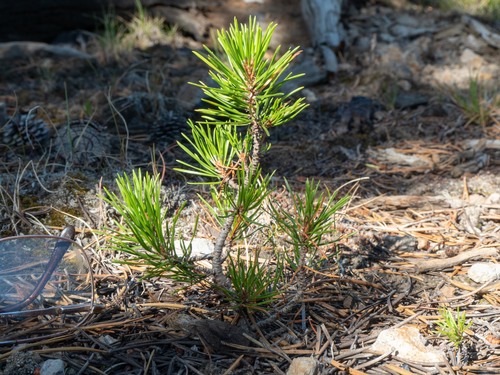
Shore Pine
Pinus contorta ssp. contorta
Care
full sun, part shade
moderate
Fast, Medium, Slow; Tolerates a wide variety of soils.
30–112ft tall , 40–40ft wide
Jun-Aug
Evergreen
Pine nuts (seeds) eaten raw or roasted; nutritious and traditional food
Supports up to 220 butterfly and moth species in Mediterranean California
Coastal dunes and headlands from Humboldt County to Mendocino County, below 500 ft elevation, in coastal scrub and pine forest on sandy or foggy coastal bluffs.
Care Guide
Planting
Plant your Shore Pine in full sun in a location with good drainage - it tolerates a wide variety of soil types, from fast to slow-draining, so drainage is flexible as long as the site isn't waterlogged. The best time to plant is in fall or early spring. Space it according to your intended size; this species varies dramatically from a shrubby 20 feet to over 100 feet tall depending on conditions, so choose your location with mature size in mind.
After Planting
Water moderately during the first growing season, then transition to an established schedule of no more than 3 times per month during summer. Once established, this is a low-maintenance plant that requires minimal intervention. Avoid the common mistake of overwatering; Shore Pine is adapted to moderate moisture and doesn't need frequent irrigation. Prune only as needed for shape or to remove damaged branches, as the data provides no specific pruning recommendations.
Endangered & Threatened Species Supported
California Species of Special Concern
Wildlife Supported
Birds

Specialist seed extractor; breeding can occur any season depending on cone crop timing

Forages seeds from cones; important fall/winter diet component in coastal pine forests

Primary winter diet staple; needle consumption critical for survival in coastal CA range
Mammals

Primary seed cache builder; critical fall collection (Aug-Oct), winter and spring feeding on stored cones

Browses twigs and needles; caches vegetation year-round in coastal CA populations
Insects

Larvae defoliate new foliage; critical host in outbreak years; overwinter in bark

Larvae tunnel through phloem; gallery patterns kill trees; overwinter in bark

Larvae bore through bark and wood of stressed/dead trees; attracted to fire-damaged stands

Larval galleries in branch tips and buds; overwinter as pupae in damaged tissue

Gregarious defoliators on needles; larvae skeletonize foliage May-Jul

Larvae defoliate foliage in outbreaks; typically 2-year cycle with outbreak years periodic

Larvae tunnel at root collar and lower stem; adults feed on bark of young trees