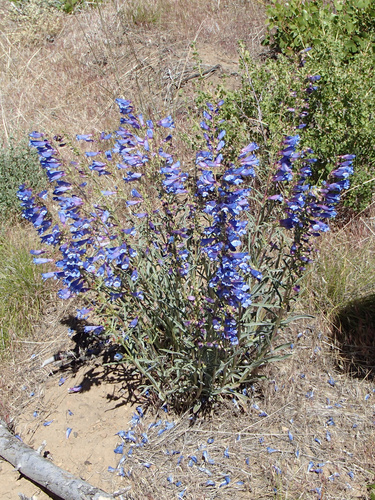
Royal Penstemon
Penstemon speciosus
Care
full sun, part shade
very low
Fast; Tolerant of a variety of soils as long as adequate drainage is provided.
2–2ft tall , 2–2ft wide
Mar-Aug
Resistant
Friendly
Prized
Eastern Sierra Nevada and interior ranges of central California from Modoc to Kern Counties, 2000-6000 ft elevation, in sagebrush scrub and pinyon-juniper woodlands.
Care Guide
Planting
Plant Royal Penstemon in full sun with fast-draining soil - this is non-negotiable, as the plant tolerates a variety of soil types only if drainage is excellent. Spring or early summer is your best planting window in the Bay Area. Space plants about 2 feet apart, and amend heavy clay soil with coarse sand or gravel if needed to ensure water doesn't pool around the roots.
After Planting
Water weekly during your first summer to establish the plant, then taper to just twice a month once established - Royal Penstemon is a low-water native and actually prefers dry conditions. The #1 mistake Bay Area gardeners make is overwatering; if the soil stays consistently moist, the plant will rot. You'll see flowers from spring through August; after blooming ends, you can cut back spent flower spikes, though the plant requires minimal pruning.
Endangered & Threatened Species Supported
Monache Checkerspot butterfly, federally endangered with critical habitat designated
Some subspecies federally protected; species has state endangered designation
California Species of Special Concern
Wildlife Supported
Insects

Larval host plant; caterpillars develop on foliage in spring months

Primary larval food plant; caterpillars feed on leaves in early spring

Historical larval host designation; caterpillar development in spring

Forages on flowers during peak bloom season; important pollen source

Larval host plant; supports caterpillar development in spring

Fungal leaf spot; associated with plant tissues

Early spring foraging on penstemon flowers; pollen collection

Pollen-feeding wasp; collects pollen for provisioning brood
Birds
Spring and early summer nectar foraging; important during migration and breeding