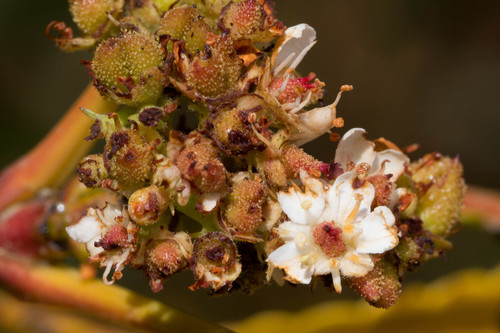
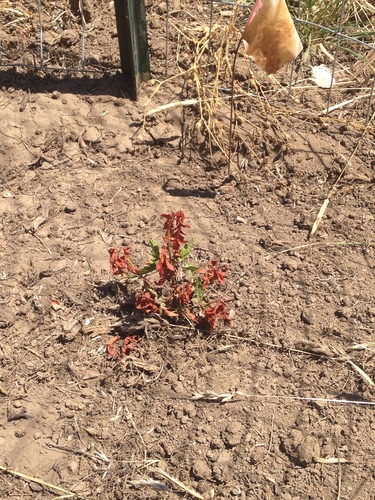
Fernleaf Catalina Ironwood
Lyonothamnus floribundus ssp. aspleniifolius
Care
full sun
low
Fast, Medium; This tree is tolerant of a variety of garden soils as long as drainage is reasonably good.
25–50ft tall , 15–24ft wide
Mar-Aug
Evergreen
Resistant
Prized
Chaparral and oak woodlands of Santa Catalina Island (Channel Islands), below 2000 ft elevation
Care Guide
Planting
Plant your Fernleaf Catalina Ironwood in full sun with fast or medium drainage - it's tolerant of various soils as long as water doesn't pool around the roots. The best time to plant is in fall or early spring to give it time to establish before summer heat. Space it generously, as this tree can reach 25–50 feet tall and develops a substantial canopy.
After Planting
Water weekly during your first summer, then taper back gradually; once established, it needs only about one deep watering per month in summer or less. The biggest mistake Bay Area gardeners make is overwatering - this Island native evolved in rocky, dry coastal canyons and will develop root rot if you treat it like a thirsty ornamental. After year one, you can largely let rainfall handle its needs except during extended dry spells. Light pruning to shape is fine, but avoid heavy cutting since this evergreen doesn't need aggressive maintenance.
Visit Calscape for more information about Fernleaf Catalina Ironwood
Endangered & Threatened Species Supported
California endemic, restricted to ironwood woodlands
Wildlife Supported
Insects
Larvae feed on Lyonothamnus foliage; species-specific host plant relationship

Spring active period; pollen provisioning for larvae

Evergreen flowering provides forage throughout year in Southern California
Small native bees utilizing pollen resources during flowering
Spring emergence coincides with Lyonothamnus flowering period
Spring foraging and larval provisioning

Nests in dead stems; forages on available flowers

Early spring foraging for colony establishment